Monday, 18 November 2013

The Withermen

In my last post I made reference to Sir Robert Thweng, one of the ringleaders of the anti-papal riots in England in the early 13th century. I thought it was worth writing a more complete piece about the Thwengs, one of the many extinct and largely forgotten baronial Norman families. They caused quite a stir in their time, though they never progressed to the upper ranks of the nobility, and several members of the family achieved a fame out of proportion to their worldly status.


The arms of the Thwengs of Kilton

The earliest surviving references to the Thwengs date from the late 12th century, where they are recorded holding a knight's fee from the Percies in Lincolnshire. They appear to have taken their odd surname - also spelled as de Tweng, Thwing, Tuenge etc - from the manor of Thweng in Holderness in East Yorkshire, a few miles south of Scarborough. A Sir Marmaduke Thweng was part of the baronial opposition to King John and acted as a coroner in Yorkshire in 1230.

So far, so unremarkable, but the family history took a turn for the dramatic with Marmaduke's son, Robert. Evidently a hot-tempered Norman with the usual acute Norman awareness of property rights, Robert de Thweng achieved national fame by his revolt against the imposition of foreign clergymen upon the English church. The granting of so many English church revenues to foreigners saw a constant flow of wealth streaming out of the country, while the imposition of a heavy tax on ecclesiastical incomes by the Pope further rubbed salt into the wound. Desperate to win favour with Pope Gregory, the young King Henry III had turned the English church into a gigantic milch cow, ripe to have her udders squeezed by grasping hands.   


Kilton Castle in North-East Yorkshire, family seat of the Thwengs

Enraged by all this lovely money slipping through his mailed fingers, and by the appointment of an Italian to a church he claimed to own, Thweng decided to perform a sort of medieval Batman routine. In 1232 he assumed the nickname William Wither, possibly meaning William the Avenger, and put himself at the head of the various gangs of rioters and protesters infesting Yorkshire. William Wither and his 'Withermen' descended on barns and grainstores owned by the 'aliens', pilfered the grain and burned the property. They gave the stolen grain to the poor, or sold it off cheap. Were it for the fact he already had a nickname, one might be tempted to identify Robert de Thweng as the historical genesis figure for the legend of Robin Hood.

Violence had already broken out in other parts of the country. In the autumn of 1231 a group of northern barons sent out letters to English bishops and monasteries, declaring that they would rather die than submit to the tyranny of the Pope and Roman clergy. Violent incidents followed. A group of foreign clerics were attacked at Saint Albans as they left a council meeting. One, a man named Cincius, was taken prisoner and only released upon payment of a hefty ransom. Another was forced to take sanctuary in York minster, in fear for his life after the protestors threatened to cut his head off.

The Great Charter

King Henry could do little to suppress the Withermen. By the winter of 1232 the protests had spread from Yorkshire down as far as Hampshire and Kent. The Justiciar himself, Hubert de Burgh, was no friend to the aliens and issued letters declaring that the rioters were immune from the authority of local Sheriffs. Hamstrung by de Burgh's effective desertion, Henry could do little except complain to the Pope and watch as England burned.

Meanwhile, Thweng had been busy. He appealed for support among the northern barons, and these hard-faced, brutish, politically volatile men were not slow in responding. The Percies, Nevills, Fitz Randolph, de Mauley, de Menyll, de Ros, and de Brus, plus some twenty other knights, all converged on Thweng's castle at Kilton in Yorkshire to plan the campaign ahead. It is easy to imagine them gathered in the smokey vault of the great hall, faces enflamed with drink and righteous indignation, fingers bloody with tearing meat from the carcase of a deer slow-roasting over a great fire. Their fathers had rebelled against old King John and wrung concessions out of him in the form of the Great Charter. Now it was time to remind John's son that royal tyranny would not be tolerated in England, so long as privileged men with swords existed to oppose it.

Hubert de Burgh at prayer

Pope Gregory supported the hapless monarch, and in February 1232 every one of the protesters was formally excommunicated. This did little to halt the attacks on the aliens. The Pope sent a further letter to Henry, threatening him with serious consequences if the violence was not stopped. Still, Henry could do nothing. His agents reported that so many high-ranking men, clerics, nobles, knights and barons, were involved in the uprising that it would be impossible to punish anyone.

Left high and dry, and with nothing to turn to save his own wits, Henry resorted to mediation. William Wither/Robert de Thweng was induced to lay down his arms and received no punishment for his crimes beyond a heavy fine. He was later reconciled to the king, and travelled to Rome with letters of safe conduct so he could voice his complaints before the Pope in person. The immediate results of this stormy meeting are unknown, but in 1240 the Pope wrote to Richard Earl of Cornwall, the King's brother, recognising the rights of English lay patrons over the claims of foreigners.

The onset of middle age did nothing to calm Robert's temper. In 1245 he again incurred the displeasure of the king, and his lands were briefly seized as punishment for a violent assault on Richard de Sarr, a clerk employed by the Archbishop of York. During the rebellion of Simon de Montfort, when Robert was an old man, King Henry did much to keep his family on the side of the royalists, granting them a number of fees and manors. Henry needed all the swords he could muster against de Montfort, even that of the one-time rebel who had caused him so much distress in his youth. Having the Thwengs onside gave the King a useful ally in the northeast, and a counter-balance to all the turbulent northerners, such as John Deyville, who had thrown in their lot with de Montfort.

Robert's date of death is unknown, but he probably died sometime in the late 1260s. Both his sons proved to be loyal servants of the crown, and his grandson Marmaduke earned fresh fame for the family by his exploits during the Scottish wars. That is for Part Two...

Thursday, 14 November 2013

The Wrath of God

The second in my series of novellas about Robin Hood, titled "The Wrath of God", is now available on Amazon. Those who have read Part One will know that this version of the legend is rather different. It is set in the mid-1220s, as opposed to the usual Richard I/King John timeframe, and incorporates real events and people from the time, such as Fulk Fitzwarin (a ballad hero in his own right), Henry III and Hubert de Burgh. 

If Part One was only slightly merry, then Part Two has no merry at all. That's not because I wanted to take the fun out of Robin Hood, but because any honest depiction of the times demanded it. The thirteenth century was a grim epoch, in England and elsewhere, and the early years of Henry III's reign were no exception.

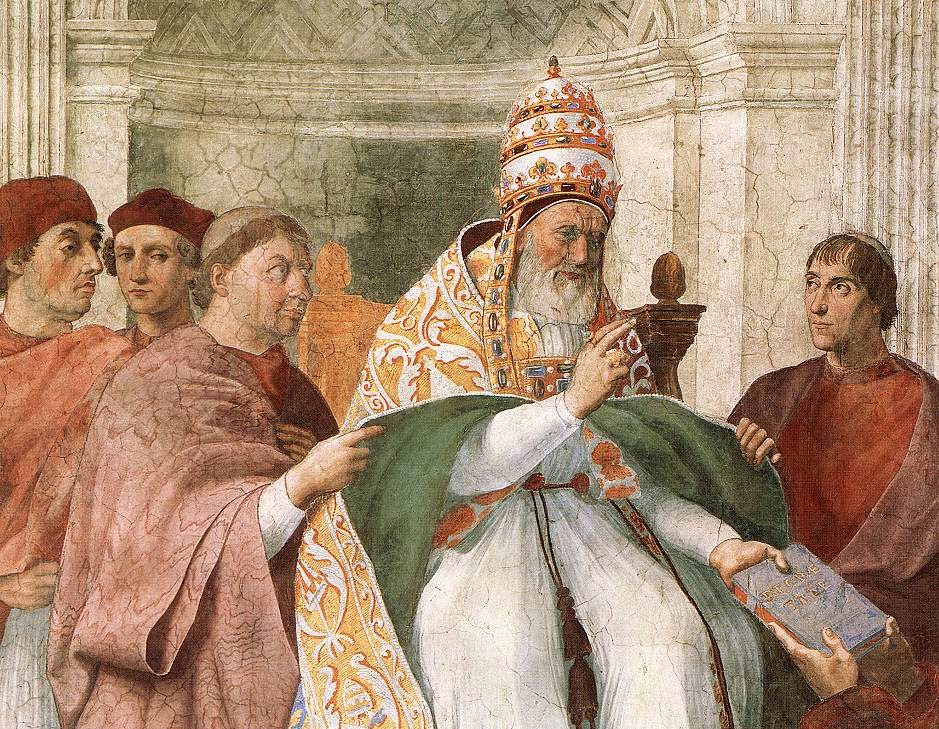
Pope Gregory IX. Not as cuddly as he looks

Two fascinating events during this period were the foundation of the papal inquisition (the direct forerunner of the Holy Inquisition that later gained such notoriety in Spain and her colonies in the Americas) by Pope Gregory IX, and the anti-papal riots in the north of England. I wanted to include both in my story. Robin Hood takes it upon himself to lead raids on church property in Nottinghamshire, and in response the Pope sends a ruthless inquisitor to hunt down The Hooded Man, as Robin has become known, and consign his body to the flames.


The arms of Thweng of Kilton

Robin's activities are inspired by a real-life Yorkshire knight named Sir Robert Thweng, of Kilton Castle in Holderness. In 1232, a few years after my story is set, Thweng assumed the nickname 'William Wither' and led gangs of men in raids upon grain-stores owned by the church, giving the stolen grain away free to the poor or selling it off cheap. The raids were a protest against the wholesale farming out of English church benefices and land to Italian clergymen, part of Henry III's attempt to curry favour with the Pope, and proved wildly popular. Instead of being arrested or executed, Thweng eventually gained a pardon and was restored to favour. There were rumours that the Justiciar, Hubert de Burgh, was in secret correspondence with the rioters, which might explain the leniency shown to Thweng. One of his descendants, the splendidly-named Sir Marmaduke Thweng, was to earn distinction as just about the only English knight to perform with credit at the Battle of Stirling Bridge.

Papal justice

The story of the founding of the inquisition is a darker one. As opposed to the earlier episcopal inquisition, whereby local church authorities dealt with heresy, Pope Gregory wanted to create a more efficient centralised organisation that could send out 'trouble-shooters' to stamp out opposition to papal authority wherever it arose. One of his most ruthless servants was Konrad Von Marburg, a German priest and nobleman who was despatched to suppress heresies in Germany and Southern France during the Albigensian Crusade.

Von Marburg's methods were pitiless and savage, and he was an expert at whipping up popular outrage against so-called heretics. His fictional protégé, Odo de Sablé, is sent by Pope Gregory to destroy the Hooded Man and restore some respect for the papacy in England...

Robin Hood (II): The Wrath of God


Saturday, 2 November 2013

Henry the Prudent

We've had Richard the Brilliant, so here's Henry the Prudent. In case I get accused of favouritism, this post is a lot longer simply because Henry reigned for 24 years as opposed to Richard's 2, and there is a lot more to say. 

Personal, as some clever person once said, is not the same as important. That maxim can be applied to Henry VII, who since the mid-20th century has been a favourite target for romantic novellists and Ricardians. Jean Plaidy got the ball rolling by describing Henry as a 'Welsh monkey', and in recent times Facebook has not been Henry's friend: 'slug face', 'slant-eyed sex offender', 'dead dork', and 'cowardly treacherous murdering usurper' have been some of the milder insults thrown his way in 2013. One historian has even proposed that poor old Henry wasn't a 'Tudor' at all, but a bastard on both sides of his family.  

I won. Get over it

The level of hatred, directed at a man who died over five hundred years ago, is startling in its intensity. Ricardians might argue that Henry had it coming, considering his part in the blackening of his predecessor's reputation. I would argue that Henry's character defects are less important than what he did as king, even if at times inseparable (more of that later). So, leaving aside his personality and his share in the blame for Richard's deconstruction, let's have a look at his actions as a ruler. 

Henry's chief aims were to survive and hand his crown onto his son (the thought of handing it on a daughter probably brought him out in a cold sweat at nights). Even if he achieved nothing else, this would represent a triumph for a man with no real claim to the throne, won via force of arms and a hefty slice of luck. As it turned out, for Henry the wielding of power was not just some fortunate accident, but his 'vocation and destiny', as S.B. Chrimes had it.  

When he came to the throne, Henry was very much an unknown quantity, in hock to his eyeballs to the King of France and little more than a lucky adventurer. Apart from stamping on frequent rebellions at home, he had to gain a bit of respect abroad and convince foreign powers to take him seriously. This he did with a vengeance, throwing aside the old Plantagenet daydreams of conquering France, while at the same time diddling the French out of vast sums of money, marrying his children into the Spanish and Scottish royal families and concluding beneficial treaties with Europe's major powers. Mediation and diplomacy, backed up by limited military force if necessary, were Henry's weapons, and he handled them adroitly. By the end of his reign, the lucky usurper was on equal terms with Aragon and Castile, the Valois and the Hapsburgs - 'all of them learnt to forgo attempts to subvert him; all learnt to respect his strength; all preferred his goodwill to his hostility'.

At home, Henry was something of a conservative, chiefly concerned with security - unsurprising, considering the number of plots and rebellions he had to cope with. Like Richard, Henry was concerned with the maintenance of law and order, and did what he could to curb the corruption and incompetence of justices. He proclaimed that his laws and ordinances were made 'for the politic well peace, and good rule and for the profit, surety and restful living of his subjects...nothing is more joyous than to know his subjects live peaceably under his laws and increase in wealth and prosperity.' 

To back up these fine words, Henry decreed that every justice of the peace should be proclaimed four times a year, with a threat of fines and dismissal for every omission. Anyone who felt aggrieved at the behaviour of a justice might seek redress from the king - again, this sounds remarkably similar to the actions of Henry's predecessor. 

Francis Bacon heaped praise on Henry as a law-maker, and stated that he was the greatest royal legislator since Edward I. This was perhaps excessive, and there is no space here to recite all of Henry's 192 statutes, but a couple are worth mentioning. One cracked down hard on the abuse of women, stating that the abduction, defiling and marrying against their will of 'maids, widows and wives' was a felony. Another provided that poor people who could not afford the expense of going to law could - at the discretion of the chancellor - be represented by counsel free of charge. 

Now we come to the elephant in the chamber: Henry's avarice. The clichéd image of him as a grim sobersides who divided his time between persecuting Yorkists and triple-checking accounts is a difficult one to shake, and there is a bit of truth to it. Following the death of his wife and eldest son, Henry took a turn for the worse (impossible to avoid discussion of his character here) and indulged in increasingly dodgy and extortionate ways of keeping his subjects in line. After Henry's death, his chief financial whiz Edmund Dudley was arrested and coughed up a document listing no less eighty-four examples of individuals whom Henry had persecuted for their money. Below are a few examples, again taken from Chrimes:

'Item Peter Centurion a Genenois was evil intreated and paid much money and upon malicious ground in my consience.

Item one Haslewood was kept long in prison and paid a great sum of money upon a light ground.

Item a poor gentleman of Kent called Roger Appleton paid 100 marks upon an untrue matter.

Item Sir Nicholas Vaux and Sir Thomas Parr paid 9,000 marks upon a very light ground...'

What seems clear is that the ageing Henry was prepared to twist the law in order to get at his subjects' purse-strings, suggesting that his understandable desire for solvency and security was degenerating into base greed and paranoia. The increasing use of bonds and recognizances against his nobles, and his petty and spiteful treatment of Catherine of Aragon, also give the impression of a man degenerating mentally as well as physically. 

Unpleasant and oppressive as some of his measures were, Henry was not a tyrant. His financial chicanery pales next to the savagery of his son and the Catholic fanaticism of his grand-daughter Mary. He was remarkably merciful to his enemies, indulging in no wholesale executions and doing what he could to reconcile the surviving Yorkists: the exception being the ruthless elimination of Edward, Earl of Warwick, done to ensure that Henry could secure his son Arthur's marriage to Catherine of Aragon.   

To conclude my little essay, Henry VII came to England on a wing and a prayer and left it solvent, secure, free of internal warfare and a respected, if not major, power in Europe. Not bad for a dork. 


Thursday, 31 October 2013

"God hath sent him for the weal of us all..."

I want to try something different, and offer some discussion of Henry VII and Richard III as rulers rather than their qualities (or lack of) as individuals. We could argue until the roses turn brown about the characters of the two men, so will set aside the 'cult of personality' for the moment and focus on what they actually did for the country. It's a big subject, so I'll tackle Richard first. I'm probably going to miss out quite a lot, being very far from an expert, so please feel free to correct me and fill in any gaps.


Ok so he killed a bunch of guys, but check out those statutes

Richard III ruled for just two years, but still managed to pack a lot in. Polydore Vergil claimed that as soon as Richard had taken/usurped the crown (delete according to inclination) he 'began to give the show and countenance of a good man, whereby he might be accounted more righteous, more mild, more better affected by the commonalty' - in other words, Richard pretended to act like a good and just ruler in order to win much-needed public support.

That sounds like a criticism - and it was certainly was, coming from Vergil - but there isn't anything unreasonable about a man doing good in order to win support. Modern politicians are still trying to pull off the same trick now.

So what did Richard do as king that was so wonderful? His main acts can be briefly summarised as follows:

  • Made public his concerns that good order should be kept, ordering his judges and noblemen to 'justlly and duly minister his law without delay or favour'. 
  • Issued a proclamation stating that any man who was wronged by a royal official would have justice of the King, and 'according to Justice and his laws they shall have remedy'. 
  • Behaved with energy and efficiency, travelling swiftly about the realm and rarely keeping to one place, thus making himself visible and accessible to his subjects.
  • Most famously of all, his one and only Parliament of 1484 issued a series of public acts that included six beneficial statutes: this included allowing bail to those suspected of felony (Richard did not invent bail, as Philippa Langley claims); protecting the rights of purchasers to land; making illegal the arbitrary system of taxation known as benevolences; preventing dishonesty in the cloth trade, and promoting English merchants over 'foreigners'.

The latter might seem a tad xenophobic by today's standards, but was a highly sensible populist move for a late medieval king sitting on a rather unsteady throne. 

Apart from his law-making, Richard went to great lengths to secure support by other means, principally by the sprinkling about of large amounts of cash. In the space of a few hectic weeks in 1483 he rewarded the scholars of Oxford with gifts, granted various local petitions, honoured debts and made all sorts of grants and gifts to religious houses, especially in the north. The latter was another shrewd move, since the north was the heartland of his support.

This barrage of schmooze got Richard what he wanted: a euphoric tidal wave of support, culminating in a triumphant entry to York. The Bishop of St David's wrote to a friend:

"He contents the people where he does best that ever did prince; for many a poor man that hath suffered wrong many days have been relieved and helped by him and his commands in the progress. And in many great cities and towns were great sums of money given him which he hath refused. On my truth, I never liked the conditions of any prince as well as his. God hath sent him to us for the weal of us all."

If the opinion of the starry-eyed bishop was reflected by the rest of Richard's subjects, then it must have seemed that Richard was set fair for a long and glorious reign. The dodgy circumstances of his accession would soon be forgotten - or smothered - and he was destined to be remembered as Richard the Brilliant. 

How, then, did it all go so horribly wrong for him? The simplest answer is that pleasing commoners and churchmen is one thing, but pleasing the nobility quite another, especially the four great magnates still standing after thirty years of inter-class genocide: Northumberland, Stanley, Norfolk and Buckingham. Of these, Richard could only truly count on his old mate Norfolk. 

That, however, is for another day and another blog post. Next up, the doings of King Henry the Seventh... 

Tuesday, 22 October 2013

Fact vs Fiction


This is a bit late, since The Tudors and The White Queen are no longer on our screens, but today I wanted to talk a bit about these shows (and others like them) and the way they affect our general understanding of the past. Since The White Queen is the more recent, I've chosen to concentrate on that.

Bollocks

I was no great fan of the series, or Philippa Gregory's version of events surrounding the disappearance of Edward V and his brother in 1483. Call me a thumpingly literal-minded traditionalist, but so far as I'm concerned those boys were murdered shortly before the accession of Richard III, and on Richard's orders. There is no evidence for their assassination, of course, and none is likely to come to light, but they vanished from public view while under the care and 'protection' of their uncle. It was Richard who had the means, the motive and the opportunity - something I might devote a future blog post to.

Gregory takes a different view, and has the elder of the boys, Edward, smothered by agents of the Duke of Buckingham, while his brother Richard is smuggled abroad and later regenerates, Doctor Who-style, as Perkin Warbeck, bane of Henry VII. This is by no means the wildest of the many and various alternative theories about the fate of the princes - they range from death by cancer to the INSANE Margaret Beaufort keeping the boys as pets in her own private dungeon - but was depicted on the programme as solemn, unimpeachable fact.*

The entire sequence was irritating, as well as muddled and badly-filmed, but Gregory is a shrewd operator, and well aware that you can't show Richard III doing bad things in the current climate. We're going to get Saint Dickon from now on, come what may.

Far worse was TWQ's other digressions from the official record. Jacquetta of Luxembourg, Elizabeth Woodville's mother, who was indeed accused of witchcraft in her lifetime, is shown as an actual functioning witch, capable of summoning up mists and storms at sea. She passes her powers on to her daughter and grand-daughter, who together use magic to scupper Henry Tudor's invasion of 1483. Elizabeth of York, Henry's future wife, manages to predict the advent of the Virgin Queen and the end of the Tudor dynasty, thus giving those upset by Richard III's death in battle something to cheer. This isn't merely changing history, but asking viewers to believe in magic. Actual magic.

So to Bosworth, the nadir of the series and possibly the all-time worst battle sequence ever filmed: even worse than the ladies of the Women's Institute in Monty Python, who re-enacted historical battles by attacking each other with handbags. To be fair, the BBC clearly lacked the budget to stage the battle properly - that would require a cast of thousands - but in that case it shouldn't have been attempted. The sight of about thirty extras running around a snowy forest (snow, in August) throwing packets of fake blood at each other before Lord Stanley came charging to Tudor's rescue with his mighty retinue of five dudes, set me chuckling and harrumphing for hours.

Turning away from the horrors of The White Queen, we have The Tudors, the most recent attempt to dramatise the life of Henry VIII. Bluff King Hal has appeared many times on screen, perhaps the best being Keith Michell's performance as the aging king through all the stages of his life, back in the 1970s. The '70s was the high point of 'responsible' historical drama, with the fiery Angevins depicted in the 'The Devil's Crown', starring Brian Cox as Henry II, and 'Shadow of the Tower', with an astonishing performance by James Maxwell as Henry VII. Stagey and low-budget these shows may appear now, but the quality of the scripts, acting and research are on a different planet to that served up by modern dramas.

Back to The Tudors, and the central performance by Jonathan Rhys Meyers as Henry. Quite apart from the the factual errors littered throughout the show - Henry's sisters are merged into one for convenience, and Cardinal Wolsey is shown cutting his own throat - Meyers is the big problem. A fine actor in his own right, he neither looks like Henry, and fails to convince as Henry, no matter how loudly or often he storms about, chewing up the scenery. In fact his Henry comes across as a bit of a whining prat, no more so than when he insists on vaulting a river to continue hunting, and ends up face-down in the drink. The best is saved for last, when Meyers deals with Henry's weight and health problems in later life by limping about with a cane and adopting a strange faux-Irish accent. At no point does he lose his sexy six-pack or suffer any loss in looks, besides a touch of Just For Men-style grey at the temples.

Other than venting - hey, this is my blog and I'll vent if I want to - my point is to ask this question: what makes for good, compelling historical drama? One in which events and personages are significantly altered, sometimes beyond recognition, or in which the 'true' story is told with as much accuracy and honesty as possible, known facts permitting?

Perhaps there is no 'right' answer - I have heard it said recently that without conjecture, any historical drama will lack interest - but I know which way I lean...especially if guff like The White Queen is fated to be the norm from now on.

Any thoughts welcome :)

* The portrayal of Margaret Beaufort needs little comment from me. It will surely go down in TV history as one of the most eccentric, crazed depictions of a historical character ever committed to screen.


EVIL


Monday, 14 October 2013

Myriads of Robin Hoods

.
Today I've decided to turn away from the blood-soaked doings of the 15th century, and delve into a bit of historical background to the legend of Robin Hood.

Some would have it that there is no 'historical background' to the legend as such, and that the character is really a hybrid of older tales, all mixed together with elements of folklore and mythology. Certainly, the oldest written form of the story as we know it, The Lytell Geste of Robyn Hode (first printed in the 1470s), is up to its eyeballs in debt to earlier tales of Fulk Fitwarin, Eustace the Monk and Hereward the Wake. If taken to pieces and carefully analysed, very little of the narrative can be confidently stated as being original.

So does that mean there was no historical Robin, and that all such 'historicist' theories are so much hot air? Possibly, though that would make the character almost unique: very few English medieval ballad heroes are entirely fictional. Surely the most enduring of them all was once flesh and blood, and not merely stitched together from the rags of other stories? A sort of Frankenstein's Outlaw?

The problem with gleaning medieval records looking for evidence of a historical Robin is that there are too many: brigands, outlaws, cut-throats and general ne'er-do-well's named Robert Hood (or variants) abound, and it is next to impossible to pick one out from the crowd and say 'this is the man'.

To give an idea of what I mean, here is a short sampling of the list of historical villains bearing the outlaw's name:

1219: Robert Hod, outlaw: murdered a man named Ralph Pessun in the Abbot of Cirencester's garden and fled, along with two accomplices. Fate unknown.

1225 AD: Robert Hod, fugitive, fled the assize court at York and had his chattels seized by the Sheriff of Yorkshire to the value of 32 shillings and 6 pence. Crime and fate unknown.

1240: Robert Hode, one of a gang that murdered a man in Devon. All of the suspects fled and were outlawed. Fate unknown.

1256: Robert Hode in Thyrune, Northumberland, fled in the company of a murderer named Richard who murdered a man with an arrow. Intriguingly, the clerk of the court changes Richard's name to John in the repeat entry: a clerical error, or did he have Robin Hood and Little John in mind?

1266: Robert Hod, townsman of Cambridge, was among the rebels that infested the Isle of Ely after the defeat and death of Simon de Montfort at the Battle of Evesham.

...etc! There are also the later Robert Hoods that appear in The Wakefield Court Rolls, and form the basis for one of the more popular recent theories that Robin was one of the 'Contrariants' i.e. one of those who rebelled against King Edward II.

So who was that hooded man, if anyone? Personally I plump for the Yorkshire fugitive of 1225 as the most intriguing, as well as one of the few to have haunted Robin Hood's traditional stamping ground of Yorkshire (if not Nottinghamshire). On the other hand, 'Hobbehod' may have been completely unremarkable, and just one of the many criminals that plagued Yorkshire in the summer of that year.

Whatever the truth, the mystery behind Robin Hood will probably never be unravelled, and continue to provide great raw material for fiction for centuries to come...

Monday, 7 October 2013

The White Hawk (III): Restoration


Today is release day: the third part of The White Hawk, my series set during the turbulent years of The Wars of the Roses, is now available on Kindle. A paperback option may follow, but not for a while yet. 

Part III is titled Restoration, and deals with the period 1470-71, when the Earl of Warwick attempted to throw his erstwhile friend Edward IV off the throne and restore Henry VI. 

Take it away, Amazon....

 “A Warwick! A Warwick!”

England, 1470. The Earl of Warwick has fled England and the wrath of his former friend, King Edward of York. Barred from entering Calais, he turns to piracy and attacking merchant ships in the Channel.

The surviving members of the Bolton family have also fled their homes in England. Landless and condemned as traitors, they follow Warwick to France and the court of Margaret of Anjou, who has lived in exile since the destruction of the Lancastrian army at Towton. Desperate to regain power, Warwick sends James Bolton with a message to Margaret, his old enemy, offering to forge an alliance with her and overthrow King Edward. Together they plan to restore the mad Henry VI, who has spent the past ten years as a prisoner in the Tower of London.

Warwick gathers a new army from the surviving Lancastrian nobles, and begins to assemble an invasion fleet. King Edward must keep one eye on this threat, while also coping with fresh rumours of conspiracy and rebellion in the north. The peace in England is once again shattered as the war-drums beat and the banners unfurl for the final death-struggle between the rival Houses of Lancaster and York.

Part III of The White Hawk chronicles the further adventures of the Boltons, caught up in a conflict not of their own making, and forced to play their part by powers beyond their control."