Showing posts with label Robin Hood. Show all posts

Friday, 27 March 2020

New book alert!

Only a few days to go until the release of my book on the Disinherited in England (31 March), published by Pen & Sword.


One of the themes I explore is the possible influence of the Montfortian period on the growth of outlaw legends in England, particularly the tales of Robin Hood. As everyone knows, Robin’s chief enemy is the High Sheriff of Nottingham. As the man himself warns his merry men in one of the early ballads:

“The hye sherif of Notyingham, Hym holde ye in your mynde.”

The corruption of sheriffs was one of the chief complaints of the Montfortian movement, and found expression in the political songs of the era. One of these, The Song Against the Sheriffs, runs as follows:

“Who can tell truly
How cruel sheriffs are?
Of their hardiness to poor people
No tale can go too far.
If a man cannot pay
They drag him here and here,
They put him on assizes,
The juror’s oath to swear.
He dare not breathe a murmur,
Or he has to pay again,
And the saltness of the sea,
Is less bitter than his pain.”

This dates from the mid-1270s, a few years after the death of Simon de Montfort. When Edward I came to the throne, one of his first acts was to sack all the sheriffs in England and replace them with new men. Thus there was a direct link between popular feeling and Edward’s careful construction of an image of good kingship, based squarely on his experience of the reform period.

Link to the book on pre-order below:


Sunday, 9 February 2020

Stitching things together

On 10 December 1276 Sir John Deyville paid 578 marks (roughly £400) to 'Peter Byset or to the abbot of St Mary's York', thus gaining the right to re-occupy his Yorkshire manor of Thornton-on-the-Hill on 20 September. This appears to have been the final redemption fine he owed to the queen, Eleanor of Provence, as the price for his rebellion in the previous decade.

This redemption fine is a quite striking parallel to an episode in the Geste of Robyn Hode, in which the outlaw entertains an impoverished military knight. Robyn takes pity on the knights and lends him the £400 he needs to redeem pledged lands from the abbot of St Mary's, York. Such a contract was unlikely after 1279, after which restrictions on lending were imposed on religious houses by the Statute of Mortmain.


In later versions of the legend the 'poor knyghte' acquires a name, Sir Richard Atte Lee or Sir Richard of the Lea. This was because two separate manuscripts, recording the deeds of Robin Hood, were literally stitched together to form a single narrative.


Thursday, 3 September 2015

Hooded musings

Why have one arrow when you can have seven?
Those who follow this blog will know I have an interest in the legend of Robin Hood, and am one of those dreadful 'empiricists' who believe the legend has some foundation in historical reality. In fact I regard the legend as more of a composite myth - essentially fictional, but with bits and pieces of historical matter woven into the narrative by any number of anonymous authors and minstrels etc.

One of the most popular 'empiricist' theories, first suggested by Joseph Hunter in the 1800s, is based on a man named Robert Hode (or Hood) of Wakefield, who lived in the Wakefield area of West Yorkshire in the early 1300s. Hunter and other writers after him suggested that this man was caught up in the rebellion of Thomas of Lancaster against King Edward II in 1322, and outlawed after the rebel defeat at the Battle of Boroughbridge. He was (so the theory goes) later pardoned and served for a time as a porter or 'valet de la chambre' in Edward II's household.

This sketchy outline of Robert Hode's career would fit with the narrative of the Geste, a 15th century compilation of Robin Hood ballads and the first to try and provide the famous outlaw with some kind of career. In the Geste Robin Hood is indeed pardoned by a king named Edward (not Richard the Lionheart) and spends some time at court before leaving to go back into outlawry.

It's a neat theory, but one with massive gaps in the evidence. There's no clear proof that Robert Hode of Wakefield was ever outlawed, or the same man as the 'Robyn Hod' who served as one of Edward II's porters. Recently I've been researching the 14th century plea rolls held at the National Archives in London, and have found a bit of evidence that may help to close a few of the gaps.

Below is the record in question:

'King's Bench Plea Rolls, 1316:

An assize comes to recognise if Alice, who was the wife of Robert de Everingham, William le Corour, Thomas Page of Brotherton, Henry de Tikehull, Adam Pakock and Robert Hode unjustly, etc, disseised Juliana, who was the wife of Richard Farburne, of her free tenement in Farburne after the first, etc. And whereupon they complain that they disseised her of four acres of land with appurtenances, etc. And Alice has come and the others have not. But a certain Thomas de Wartre answers for them as their bailiff, and says that they have done no injury or disseisin thereupon. And as to this he places himself upon the assize....'

At first glance it doesn't look very exciting, just a standard land dispute. However, a few things stand out. Alice's husband, Robert de Everingham, was the last hereditary Keeper of Sherwood Forest. He was imprisoned in Nottingham Castle for various offences, and died there in 1287, quite possibly tortured to death for refusing to throw himself on the mercy of a jury. So here is Robert Hode (almost certainly the Wakefield man) in league with the widow of the Keeper of Sherwood.

The locations mentioned - Brotherton. Tikehull or Tickhill, Farburne or Fairburne - are all within the area of Wakefield and Barnsdale: Barnsdale, a wooded valley in the West Riding, is the setting for much of the early Robin Hood ballads.  See the map below (Barnsdale itself is a little way south of Ferrybridge):

It's also worth pointing out that the Everinghams were a rebel family: Robert's brother and Alice's brother-in-law, Adam de Everingham, definitely fought at Boroughbridge and was taken prisoner by the royalists. He had to pay King Edward the hefty sum of 400 marks to save his neck and buy his freedom.

Granted, this is still a long way from proving that Robert Hode was an outlaw in Barnsdale, or the model for the ballads of Robin Hood. However it does at least add to our knowledge of the man, and demonstrate his connections with a family of knightly rebels and certain ballad locations. More information may yet come to light. Now, back to those dusty old court rolls...


Monday, 12 January 2015

Who gets to meet Robin...?

...and the answer is...

...Alison Bahmuller!

With thanks to everyone who entered their names. A free Kindle edition of the novella, The King's Pardon, Part IV in my Robin Hood series, will be winging its way to Alison just as soon as its ready! I'm currently about a quarter of the way through it, and with luck and a following wind Robin should be springing back into action next month.

Alison, say hello to Robin
Apologies to all for my silence over the Christmas and New Year period - I was busy with family 'stuff', as many people were during the festive season, and suffered another loss of my internet connection: that's the price for living out in the wilds of West Wales!

I have lots of plans for 2015, including the re-release of The Best Weapon, the fantasy novel I co-wrote with my good friend Martin Bolton, the rest of The White Hawk series, and a (very) long-delayed sequel of sorts to The Half-Hanged Man...

Happy 2015 everyone!

Tuesday, 16 December 2014

Robin Hood IV

I've had a few queries lately about my Robin Hood series, and when the next installment is due. I've been busy with other projects recently, but will soon be starting work on Part IV of the series, provisionally titled Robin Hood (IV): The King's Pardon.

I've also decided to offer readers a (small) part in the story - just leave a comment under this post and you get to appear as a character! No name is too bizarre, I'll fit you in somewhere :)

You also win a free copy of the book when it's ready: paperback or Kindle, it's your choice.

Leave a comment, and get to meet this man...
I'll choose a winner after Christmas to join The Hooded Man in his next adventure - and in the meantime, happy holidays!


Thursday, 17 July 2014

Thief of Barnsdale

I have just compiled the three separate parts of my Robin Hood series to date (currently available on Kindle), and released them as a single volume in paperback.


'Robin Hood: Thief of Barnsdale' is a bit pricey, but at over five hundred pages I was unable to bring the price down from a set minimum. I will be holding various competitions to win free copies of the paperback, so if interested keep your eyes peeled!

Those who have read any of the series so far will know that I have attempted to do something different with the well-worn tale, moving Robin out of his usual Richard I/Prince John comfort zone and re-locating him in the early years of Henry III's reign. The story is based on contemporary chronicles and legal records, principally on the handful of intriguing references in the Pipe Rolls to a Robert Hood or 'Hobbehod', fugitive, who fled from the justices at York in the mid-1220s for crimes unknown.

I have tried to capture the grim and gritty feel of a realistic 13th century England, and merge the content of the earliest surviving ballads with historical events and people. At least three more chapters of Robin's story are sketched out in my head, including a potential trip to Constantinople and the Holy Land.

Note: readers of the Kindle versions may notice that I have changed Robin's name from the more authentic 'Robyn Hode' to the standard Robin Hood - this was more for convenience than anything, so apologies for any apparent lack of continuity.

Link to Thief of Barnsdale on Amazon  

Thursday, 24 April 2014

From small seeds, mighty oaks grow...

Here are some more of my musings on the origins of Robin Hood. For those unfortunates who missed my previous musings, you can get an eyeful of them here:

Previous musings on Robin Hood

What follows is the fruit of a lot of research, done by myself and others, over the past decade or so. Sometime in the nearish future I hope to collate it all into a proper academic essay, with references and a bibliography and everything. For the time being, you'll just have to take my word for it.

Robin Hood may well have been fictional, a never-never figure largely pieced together from older ballads, some based on the careers of historical outlaws. I think it more likely that he did exist, but 'he' was more of a 'them'. Here's what I mean...

In 1254 England was bubbling over with unrest, thanks to the incompetent government of King Henry III. Yorkshire, the largest county in England, was particularly wild and lawless, and the Calendar of Inquisitions for that year records a mob attacking church property in North Yorkshire owned by the Abbey of Byland:

Mob rule

The mob was led by Sir Richard de Riparia, a local knight whose manors bordered on the Yorkshire estates of Simon de Montfort, Earl of Leicester and a serious pain in King Henry's rump. If you browse through the list of named offenders, you will spot a Robert Hod or Hood.

Now, here's fun. Those of you with microscopes, extremely good eyesight and about five hours to spare, see if you can spot the name Thomas Hod from this ancient legal record, taken from the AALT website:

He's on here. Honest.

This record is also from 1254, and Thomas Hod is listed among a number of men locked up in York gaol for committing armed robberies and other crimes. He is described as a man of Thirsk, also in North Yorkshire and one of the manors owned by Sir John Deyville.

I have discussed bold Sir John before. See below:

Deyville Part One

Deyville Part Two

At this time Sir John was still a teenager, but already in serious trouble, excommunicated for various offences and obliged to flee the country for a time to avoid retribution. It is extremely likely that the crimes of his tenant Thomas Hod had something to do with it, possibly acting on his lord's behalf. As leader of the baronial rebels in the north, Sir John was probably involved with the earlier raid on church land as well.

So here we have a Robert and Thomas Hood, maybe relatives, active in a spate of robberies and attacks on church property in Yorkshire in the mid-1250s. Minor players, perhaps, but active alongside rebellious noblemen who soon went on to greater and more destructive things.

Clang, hack, slash, maim...etc
Meanwhile, up in Northumberland...in 1256 a Robert Hode fled the village of Thyrune in the company of a man named Richard, accused of killing another man with an arrow. This Robert Hode has nothing to do with the events in Yorkshire, but part of the case reads as follows:

"Richard son of William of Thyrun killed Roger Pessun with an arrow and is summoned to court. And John has fled, therefore let him be outlawed..."

For some reason the clerk has changed the name of the killer from Richard to John. Was this a mere clerical error, or was the clerk aware of an existing tale of Robin Hood and Little John, and changed Richard's name due to his association with a Robert Hode?

Just a few years later, we see the first evidence of the name 'Robin Hood' and variants being used by clerics as an alternative name for various criminals: in 1261 a fugitive named William le Fevre in Berkshire had his name changed to William 'Robehod'. Another eight instances of this practice, ranging from Robehod to Robynhod to Rabunhod, occur all over the south of England until the end of the century.

Sadly, we have no idea what the earliest ballads or rhymes were like. The earliest printed ballads date from c.1470, over two hundred years after this period. We can, however, surmise where some of their inspiration may have come from.

The key period is the 1260s, when the Second Baron's War exploded all over the hapless King Henry and left him a prisoner in the clutches of Simon de Montfort. Our old friend John Deyville was back in town, and from 1260 onwards did his damnedest to stir up trouble in the north. In that year he and various accomplices were chased all over Yorkshire by the Sheriff, who submitted a large bill to the Exchequer for food, wine and outstanding wages for his soldiers.

While Deyville was tearing things up in North Yorkshire, there was further unrest in Holderness in the East Riding. Here there was a full-blown rebellion against royal authority, and a band of rebels broke down the bridges over the Humber to prevent the Sheriff's troops moving in to restore order. The prime movers in the revolt were the Constables, a local knightly family, and among their followers was another Robert Hod:

Robert Hod of Holderness

This Robert Hod was almost certainly a different man to the earlier troublemaker of 1254, but it doesn't really matter: by this time it seems the name Robin Hood was becoming well-known as a byword, possibly even a symbol, of resistance against lawful authority. The fact that real-life criminal Robin Hoods were popping up all over the country can only have helped the legend to spread.

Another Robert Hod cropped up at The Battle of Northampton in 1264, fighting on the side of the baronial rebels. Here the rebels were defeated and de Montfort's son, another Simon, captured. This Robert Hod appears to have been a member of a local family of Hoods, and was later fined heavily for supporting the rebels.

Yet another Robert Hod - they were like rabbits - was among the rebels who holed up in the Isle of Ely in 1266/7, and there re-fortified the old fortress used by Hereward the Wake in his struggle against the Normans. Here we have an example of an old legend merging with an emerging one, fact and history intertwining and no doubt getting thoroughly mixed up in people's minds:

Robert Hod of Ely

The man in Ely is significant, for he and his comrades were summoned there by John Deyville, who had made the island his headquarters. Not for nothing did Walter Bower, the 15th century Scottish chronicler, have this to say under the year 1266:

"...John Deyville was a rebel at Ely: Robert Hode was an outlaw among the woodland briars and thorns...in this year arose the famous cut-throat Robert Hode and his accomplice Little John, whom the foolish populace so love to celebrate in ballad and song..."

Intriguingly, there was also a John le Petit or Little John listed among the Ely rebels. Whether he and Robert Hod knew each other and worked together, can only be guessed at.

John Deyville is the unifying figure in all this. He and his brother Robert spent the winter of 1266 as outlaws in Sherwood Forest, and had earlier obtained royal permission to crenellate their fortified manor house on the summit of Hood, a dramatic location in North Yorkshire.

Hood Hill near Thirsk, in North Yorkshire.
The coincidence of the naming of their house is obvious, and it may be that the exploits of the Deyvilles were merged with the growing content of the Robin Hood ballads. Sir John himself is praised in various contemporary rhymes, including The Song of the Barons.

This Yorkshire stuff is all very well, but what about his lordship, the High Sheriff of Nottingham? After all, Robin is nothing without his opposite number. Every ying needs his yang, and in this case the yang may well have been based on a historical Sheriff, one Reynold de Grey.

Reynold was tasked with defending Nottingham against the various bands of outlaws that infested Sherwood during this period. The town itself was attacked in 1267, its timber walls damaged and a number of citizens killed. The Deyvilles were responsible for some of these disturbances, but there was another man who made life hell for law-abiding folk. His name was Roger Godberd, and it was the job of Reynold de Grey, as High Sheriff of Nottinghamshire and Derbyshire, to hunt him down. Eventually, he did just that:

"Whereas on the showing of the magnates of the council and many others the king lately understood that in the counties of Nottingham, Leicester and Derby, as well as in the common ways and in the woods, numbers of men on horseback and on foot, were abroad and that no religious or secular person could pass without being taken by them and spoiled of their goods...Reynold de Grey has bravely pursued these men and captured one Roger Godberd, their leader and master, and delivered him to prison..."


Robin Hood and the Poor Knight
Here Roger Godberd is 'Robin Hood' to the life, leading a band of outlaws in Nottinghamshire while being hunted by his nemesis, the Sheriff. Godberd was allied to the Deyvilles and also to Robert de Ferrers, his feudal lord and 6th Earl of Derby. Surprisingly, he was not executed, but pardoned and died a free man.

During his crime spree Godberd was given shelter by a Yorkshire knight named Sir Richard Foliot, on his castle and lands at Fenwick. Fenwick lies near Barnsdale, the wooded valley in South Yorkshire named as Robin Hood's haunt in the earliest printed ballads.  Foliot's shelter of Godberd is also reminiscent of the kindness of Sir Richard de la Lee in the ballads, who shelters Robin Hood's men in his castle. Here again, fact and fiction collide and form the ingredients of a big semi-fictional soup.

The 'poor knight' of the ballads initially has no name, and is only later merged with the character of Richard de le Lee. He may well have been based on - you guessed it - John Deyville, who thanks to his constant wars was in debt to his armpits and owed almost £400 to the Abbot of Saint Mary's at York. This almost exactly mirrors the debt owed by the poor knight to the same abbey in the story.

Finally, Sir Richard de la Lee himself may well be identified with another historical figure right at the end of this period. In the ballad he tells Robin that his son has been outlawed for slaying a knight of Lancashire. The Staffordshire Rolls for the year 1275 state that one Robert de la Lee, son of Richard, was outlawed for murdering two men, beheading them and carrying their heads into Cheshire. This unpleasant incident may have occurred in a different part of the country, but the parallels are otherwise eerily similar to the story.

And here almost endeth the lesson. Except...who was the original Robin Hood, if anyone? For the story to be already well-known by 1261 surely means that the genesis figure existed at least a couple of generations earlier. The various Robert Hoods and other evildoers of the 1250s/60s added meat to the bare bones of a story that might well have originated with a mysterious fugitive from justice named in the Pipe Rolls for the years 1225-34.

Step forward, Robertus Hood, fugitive...


...if you can see him!

My thanks go to Robert Fortunaso, who runs the Robin Hood - Fact or Fiction website I have made liberal use of here.


Monday, 24 February 2014

The Hooded Man


This will be my last post for a few weeks before I go on holiday - huzzah! Before I go, here is the latest instalment of my Robin Hood serial, The Hooded Man. It is available on Kindle and will be on *FREE* download from March 1st-3rd.

Robin has been gone a while, and he returns to England to find all not as it was...

Summer, 1242 AD. King Henry III of England is locked in a disastrous war with his rival, the King of France, and about to engage the French army at Taillebourg.

Serving in the English army is a captain of archers named Robin Hood. Forced to leave his homeland, Robin has spent fourteen years in exile, serving as a soldier in various garrisons and embracing the heresy of the Cathars.

After the English army suffers a catastrophic defeat, Robin obtains a royal pardon from the King and makes his way back to England, hoping to see his beloved Matilda again. In his long absence, the legend of Robin Hood, the Hooded Man, has spread and flourished. Robin finds he has become a legend in his own lifetime, and inspired other men to take up the fight against Norman tyranny.

Most of his old followers are dead or scattered. Those who survive are leading quiet, honest lives, desperate to avoid the notice of the law. Driven by his heretical faith and a desire to strike one last blow against injustice, Robin attempts to bring the survivors together again in Sherwood, and spark a rebellion that will drive the Norman oppressors into the sea.

Unwilling to accept that his time is past, Robin risks all to bring England to the verge of civil war, even the lives of those he loves. War and death loom on the horizon as Robin’s enemies prepare for the return of the Hooded Man...

Thursday, 14 November 2013

The Wrath of God

The second in my series of novellas about Robin Hood, titled "The Wrath of God", is now available on Amazon. Those who have read Part One will know that this version of the legend is rather different. It is set in the mid-1220s, as opposed to the usual Richard I/King John timeframe, and incorporates real events and people from the time, such as Fulk Fitzwarin (a ballad hero in his own right), Henry III and Hubert de Burgh. 

If Part One was only slightly merry, then Part Two has no merry at all. That's not because I wanted to take the fun out of Robin Hood, but because any honest depiction of the times demanded it. The thirteenth century was a grim epoch, in England and elsewhere, and the early years of Henry III's reign were no exception.

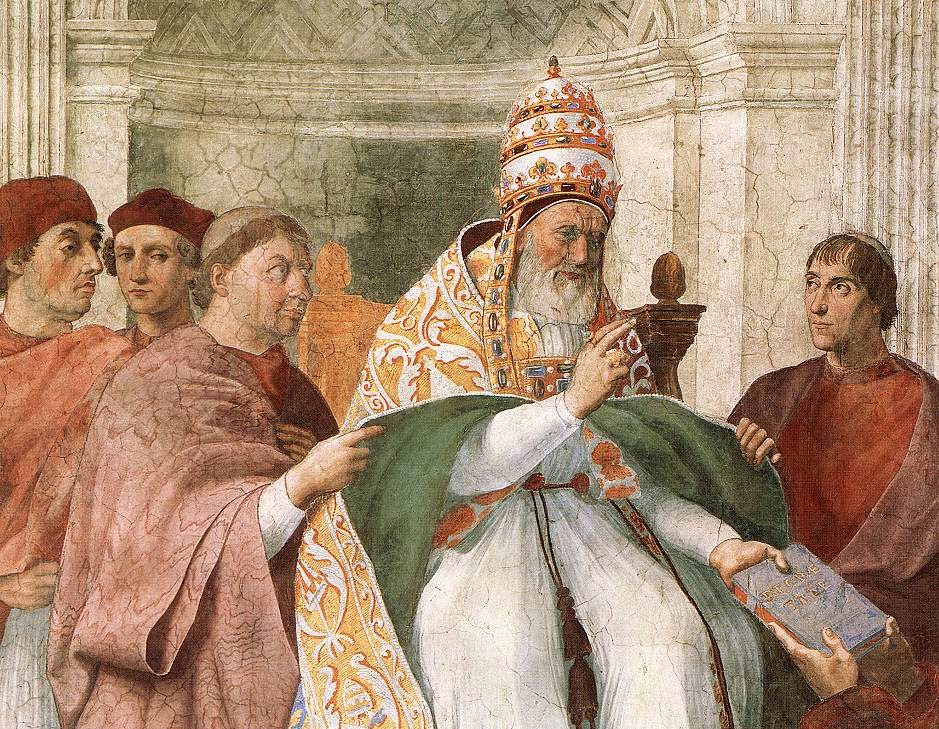
Pope Gregory IX. Not as cuddly as he looks

Two fascinating events during this period were the foundation of the papal inquisition (the direct forerunner of the Holy Inquisition that later gained such notoriety in Spain and her colonies in the Americas) by Pope Gregory IX, and the anti-papal riots in the north of England. I wanted to include both in my story. Robin Hood takes it upon himself to lead raids on church property in Nottinghamshire, and in response the Pope sends a ruthless inquisitor to hunt down The Hooded Man, as Robin has become known, and consign his body to the flames.


The arms of Thweng of Kilton

Robin's activities are inspired by a real-life Yorkshire knight named Sir Robert Thweng, of Kilton Castle in Holderness. In 1232, a few years after my story is set, Thweng assumed the nickname 'William Wither' and led gangs of men in raids upon grain-stores owned by the church, giving the stolen grain away free to the poor or selling it off cheap. The raids were a protest against the wholesale farming out of English church benefices and land to Italian clergymen, part of Henry III's attempt to curry favour with the Pope, and proved wildly popular. Instead of being arrested or executed, Thweng eventually gained a pardon and was restored to favour. There were rumours that the Justiciar, Hubert de Burgh, was in secret correspondence with the rioters, which might explain the leniency shown to Thweng. One of his descendants, the splendidly-named Sir Marmaduke Thweng, was to earn distinction as just about the only English knight to perform with credit at the Battle of Stirling Bridge.

Papal justice

The story of the founding of the inquisition is a darker one. As opposed to the earlier episcopal inquisition, whereby local church authorities dealt with heresy, Pope Gregory wanted to create a more efficient centralised organisation that could send out 'trouble-shooters' to stamp out opposition to papal authority wherever it arose. One of his most ruthless servants was Konrad Von Marburg, a German priest and nobleman who was despatched to suppress heresies in Germany and Southern France during the Albigensian Crusade.

Von Marburg's methods were pitiless and savage, and he was an expert at whipping up popular outrage against so-called heretics. His fictional protégé, Odo de Sablé, is sent by Pope Gregory to destroy the Hooded Man and restore some respect for the papacy in England...

Robin Hood (II): The Wrath of God


Monday, 14 October 2013

Myriads of Robin Hoods

.
Today I've decided to turn away from the blood-soaked doings of the 15th century, and delve into a bit of historical background to the legend of Robin Hood.

Some would have it that there is no 'historical background' to the legend as such, and that the character is really a hybrid of older tales, all mixed together with elements of folklore and mythology. Certainly, the oldest written form of the story as we know it, The Lytell Geste of Robyn Hode (first printed in the 1470s), is up to its eyeballs in debt to earlier tales of Fulk Fitwarin, Eustace the Monk and Hereward the Wake. If taken to pieces and carefully analysed, very little of the narrative can be confidently stated as being original.

So does that mean there was no historical Robin, and that all such 'historicist' theories are so much hot air? Possibly, though that would make the character almost unique: very few English medieval ballad heroes are entirely fictional. Surely the most enduring of them all was once flesh and blood, and not merely stitched together from the rags of other stories? A sort of Frankenstein's Outlaw?

The problem with gleaning medieval records looking for evidence of a historical Robin is that there are too many: brigands, outlaws, cut-throats and general ne'er-do-well's named Robert Hood (or variants) abound, and it is next to impossible to pick one out from the crowd and say 'this is the man'.

To give an idea of what I mean, here is a short sampling of the list of historical villains bearing the outlaw's name:

1219: Robert Hod, outlaw: murdered a man named Ralph Pessun in the Abbot of Cirencester's garden and fled, along with two accomplices. Fate unknown.

1225 AD: Robert Hod, fugitive, fled the assize court at York and had his chattels seized by the Sheriff of Yorkshire to the value of 32 shillings and 6 pence. Crime and fate unknown.

1240: Robert Hode, one of a gang that murdered a man in Devon. All of the suspects fled and were outlawed. Fate unknown.

1256: Robert Hode in Thyrune, Northumberland, fled in the company of a murderer named Richard who murdered a man with an arrow. Intriguingly, the clerk of the court changes Richard's name to John in the repeat entry: a clerical error, or did he have Robin Hood and Little John in mind?

1266: Robert Hod, townsman of Cambridge, was among the rebels that infested the Isle of Ely after the defeat and death of Simon de Montfort at the Battle of Evesham.

...etc! There are also the later Robert Hoods that appear in The Wakefield Court Rolls, and form the basis for one of the more popular recent theories that Robin was one of the 'Contrariants' i.e. one of those who rebelled against King Edward II.

So who was that hooded man, if anyone? Personally I plump for the Yorkshire fugitive of 1225 as the most intriguing, as well as one of the few to have haunted Robin Hood's traditional stamping ground of Yorkshire (if not Nottinghamshire). On the other hand, 'Hobbehod' may have been completely unremarkable, and just one of the many criminals that plagued Yorkshire in the summer of that year.

Whatever the truth, the mystery behind Robin Hood will probably never be unravelled, and continue to provide great raw material for fiction for centuries to come...

Wednesday, 21 August 2013

Robyn Hode (I)


Hot on the heels of The Wonder of Rome blog hop, I have compiled and re-released the first part of my version of the legend of Robin Hood. 'Robyn Hode (I)' is a novella set during the lethal wilderness of northern England in the early 13th century, and now available on Amazon - see link and blurb below!

"Robyn Hode in Barnsdale stood..."

England, 1224 AD. The north of the country is wild and lawless, plagued by bands of outlaws and robbers and broken men. There is little justice and less order, and the King's officers struggle to impose their royal master's law. 

Book One of Robyn Hode tells the story of Robert Hode, a yeoman farmer and petty thief, forced to flee into the forests of Yorkshire after defending his home and family against the malice of Sir Gui de Gisburne. Hunted like an animal through the woods, he falls into the company of Hobbe of Wetherby, a notorious murderer and the most wanted felon in the north. Robert must rely on his all his courage and skill to survive and avoid ending as crowbait on the gallows.

Mingling fact with fiction, and drawing heavily on surviving contemporary records, "Robyn Hode" is a tough and unsqueamish tale and like no other version of the ancient legend.


Thursday, 27 June 2013

Robyn Hode, part the Third

Part Three of my Robin Hood - or 'Robyn Hode' - series of short novellas is now available on Amazon. Readers of this blog might notice that I use a standard image for the covers, until my good friend and co-writer (as well as talented artist) Martin Bolton designs an individual cover for each installment.

The series has been going great guns so far, and I'm very pleased with the response. I thought I would share a customer review from Amazon, because it is very positive and the reader really 'got' what I am trying to achieve with the series:

"I have been an avid collector of books and films about Robin Hood for close to sixty years and believe that at some point I have probably read every book, fact or fiction about the legendary English hero, including juvenile fiction and some offerings that have been immediately consigned to the waste paper bin.

I bought Mr.Pilling's ROBYN HODE (1) in the belief that it was the first volume of a new series of novels. It is not, it is a short part work consisting of a handful of chapters, which I now understand will build into a full length saga over a period of time. This is my only disapointment with this publication... that I must wait between episodes for the next installment. This part followed on very quickly and I hope that the author will not keep us waiting too long until the next is released.

If the rest of the series in of the same quality or writing and style as this offering then they will build into one of the potentially best medieval fiction novels I have read in a long time, certainly on a par with Angus Donald's OUTLAW series.

The saga is set during the reign of Henry III, the most likely epoch for the source of the Robin Hood legends, and Mr. Pilling has choosen to base his tale not upon the commonly told legends of the Robin Hood ballads but around the snippets of historical records in the county rolls which may have some connection to the elusive outlaw hero; neatly stiched together with real historical characters interwoven to present a completely different vision of how the outlaw legend came to be with characters that are true to life with flaws and a dark side not just traditional villains and heros. This second enstallment fleshes out the characters of Gui of Gisburn, Tuck and the High Sheriff of Yorkshire and establishes Robyn as a denizen of the greenwood.

I now look forward to the next installments and hope that the promise of this developing into a really first class novel is met. My head tells me that I should wait to read the whole work but I know that in truth is shall not be able to resist taking in each part work as it is published. Meanwhile I will need to search out any other works that this author has to offer."

Monday, 1 April 2013

The Hooded Man cometh...


Fairbanks...but he won't be much like this. Sadly, real medieval outlaws weren't half so merry as Douglas Fairbanks and his pot of ale. 

He will be cometh-ing in my next novel, "Nowhere Was There Peace", due to be released by Fireship Press in the next few weeks. As part of the build-up to the release, I wanted to talk a little about some of the themes and characters. 

The title comes from the 15th century Scottish chronicler, Walter Bower, a canon of Inchcolm Abbey. He devoted much of his life to working on the Scotichronicon, a history of Scotland and the British Isles.

On page 355 of his work Bower writes of the pitiful state of England in the year 1266:

"Moreover all those who supported Simon in that battle were outlawed and disinherited, so that in the in following year within one week the king of England bestowed lands worth 17,560 nobles on others. The greater part of the disinherited infested the roads and streets and became robbers. Then a deadly struggle broke out between the king and the disinherited, in the course of which villages were burned, towns wrecked, whole stretches of land depopulated, churches pillaged, religious driven from their monasteries, clerics had money extorted from them and the common people were ruined. Nowhere was there peace, nowhere security..."

Bower is writing of the continuing unrest in England following the defeat and death of Simon de Montfort, Earl of Leicester, at the Battle of Evesham in 1265. De Montfort's death was not the end of the civil wars, as the remainder of his supporters continued to hold out in the woods and wild places.

King Henry III, never the wisest of rulers, had provoked them into further rebellion by declaring that all those who had supported the Earl were to be stripped of their lands and goods. The "Disinherited", as they were termed, had little option but to snatch up their swords and carry on fighting.
EveshamThe death of Simon de Montfort at Evesham. After the battle the Lord Edward, Henry III's son, had De Montfort dismembered, his head stuck on a pole and his testicles hung either side of his nose. It didn't pay to mess with Ned...

So who is the Hooded Man? I refer of course to Robin Hood, England's most famous and enduring outlaw hero. I'm not the first to suggest that the legend might have originated from the bloody and dramatic years of the Baron's Wars, in which the common people of England were given a voice in government for the first time in history (albeit a small one). 

Returning to Bower, on page 353 under the year 1266 he makes the following reference to Robin Hood:

At this time there arose from among the disinherited and outlaws and raised his head that most famous murderer Robert Hood, along with Little John and their accomplices. The foolish common folk eagerly celebrate the deeds of these men with gawping enthusiasms in comedies and tragedies, and take pleasure in hearing jesters and bards singing [of them] more than in other romances. Yet some of his exploits thus recited are commendable, as is clear from what follows..."

Bower goes on to describe 'Robert Hood' hearing Mass and then beating his enemies in battle: the inference being that the penitent man shall always be saved.

On page 357:

1266 

In that year also the disinherited English barons and those loyal to the king clashed fiercely; amongst them Roger de Mortimer occupied the Welsh Marches and John d’Eyville occupied the Isle of Ely; Robert Hood was an outlaw amongst the woodland briars and thorns.  Between them they inflicted a vast amount of slaughter on the common and ordinary folk, cities and merchants..."

Bower describes a very different Robin to the jolly outlaw hero we are all used to seeing in films and novels. This one is a 'famous murderer' who helps to inflict a great deal of damage and slaughter on the country. As such, he is rather closer to the grim reality of medieval crime than Errol Flynn. 

The chaotic state of England at this time makes a perfect setting for fiction, and the rebellion of the Disinherited provided a number of ideal characters: bellicose, fiery men like John D'Eyville, the Lord Edward, Roger Mortimer etc all appear in my novel, burning and hacking their way through the pages as they did through life. The central character, Hugh Franklin, is fictional, a stonemason's son turned government agent who has to cope with the many dangers that this era can throw at him.

And what of not-so-merry Robin? Was Bower correct, did the real-life outlaw hero really exist at this time and fight alongside the Disinherited? The historian Maurice Keen thought that the times and the context would have suited a historical Robin Hood, but lamented the fact that there is no record of anyone called 'Robert Hood' among De Montfort's followers or the Disinherited.

As it happens, Keen was wrong:
Hood

The above is an extract from a 1269 Court of Inquisitions, in which local men of Cambridgeshire accused of having supported the Disinherited were summoned to explain their actions. This 'Robertus Hod' or Robert Hood was a townsman of Cambridge, probably one of those who joined the revolt after receiving a letter exhorting them to do so from John D'Eyville, leader of the rebels encamped in the Isle of Ely.

So is this man 'the' Robin Hood? It isn't easy to say. There are many theories as to the origins of the outlaw, and it may be that he is an amalgamation of history, myth and folklore. I put forward my own ideas in Nowhere Was There Peace, but you will have to wait for the book to find out what they are...