Showing posts with label History and England. Show all posts

Tuesday, 26 May 2020

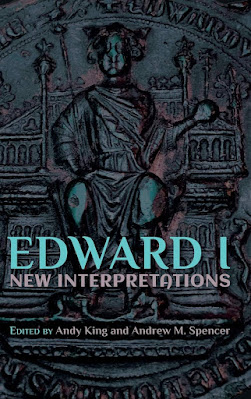
Edward I: New Interpretations

The following is a review of Edward I: New Interpretations, edited by Dr Andy King and Dr Andrew Spencer and published in February 2020.


To paraphrase the late, great RR Davies, Edward I of England is the second most divisive figure in British history after Oliver Cromwell. Since the 1950s his reputation among historians has jerked up and down like the proverbial yo-yo, influenced by the usual drivers of revisionism and counter-revisionism. The perception of the general public is a different matter: to them Edward I is the pantomime villain of Braveheart and various popular novels, as well as the go-to bogeyman for Welsh and Scottish nationalists.

In recent years Edward’s reputation has been somewhat rehabilitated. From the cyclic low of the early 1970s, historians such as Caroline Burt, Andrew Spencer and Andy King have all presented more positive appraisals of the reign, while Michael Prestwich - the Godfather of Edwardian studies for the past forty years - has revised the negative assessments of his early career. This latest study, Edward I: New Interpretations, continues the general upward curve while also highlighting Edward’s flaws and failures.

To begin with, this is not a biography in the style of Prestwich or Marc Morris. Instead the editors, Spencer and King, have compiled a series of essays by different contributors. Each chapter addresses different aspects of the reign. These range from Edward’s administration of justice before he came to the throne, his relationship with Scottish magnates, his veneration of the Virgin Mary, and so on. Each contributor has published on their chosen subject and the depth of research and analysis is impressive, even if one doesn’t always agree with the conclusions.

There is much more good than bad to be found in this volume, so it might be easier to deal with the latter first. Edward’s life and times were packed, and it is impossible to cover everything in a book that struggles to reach the 200-page mark. There is no mention of Wales, the Jews, Gascony, the Holy Land, Edward’s relations with Philip IV and other European monarchs, Flanders, the Grand Alliance, the Riccardi, Simon de Montfort, Charles of Salerno, Henry of Castile, William Wallace, Robert de Bruce…the list goes on, and might indeed go on forever. The editors were obviously working within space limits, but their choices are arguably questionable. Should the conquest of Wales, for instance, be relegated at the expense of Edward’s devotion to the cult of Mary? The latter, it is true, casts fresh light on the king’s religious devotions: yet one might argue that this is a side-issue at best, compared to his controversial relations with the Welsh. A chapter by David Stephenson, who has written extensively (and recently) on Edwardian Wales, would have been ideal.

Otherwise it is difficult to fault the evidence and arguments presented here. My personal favourite is Kathleen Neal’s eye-opening discussion of the nature of letters and discourse in this era. I was vaguely aware that kings did not pen their own correspondence, but the subtlety and labour that went into producing just one royal letter or instruction almost defies belief. As Neal elaborates, royal correspondence was very much a team effort, composed by specialist clerks trained to enact the king’s will. Michael Brown’s article on Edward’s ultimate failure to conquer Scotland, based on his fundamental inability to understand the Scottish magnates, comes a close second. Again, though, the decision to omit Wales and include Scotland seems odd. A comparison between the Scots and Edward’s more successful relationship with the Welsh gentry would have been apt.  

I may as well address the sullen, glowering elephant in the room. For those whom Edward Longshanks is simply the Big Bad, a cardboard prop to pre-conceptions and emotional needs, a book such as this will hold little interest. Any positive assessment of this particular Plantagenet tends to get written off as a whitewash, a twisted attempt to rehabilitate medieval England’s very own Stalin (or, at best, Khrushchev). Nothing sticks like a good cliché, especially with a grudge to compel it. One can argue that Edward was no different in his attitudes and behaviours - repellent as they may seem - than most of his peers, but in the end it gets boring. Why bother? To paraphrase another clever chap, whose name escapes me at the moment: I have tried these people in the morning, and in the evening, and found in them nothing but spite. Let them bide.

To be less condemnatory for a moment, there is also the issue of price: the book retails at about £60. This is common among specialist publishers, but scarcely calculated to make it leap off the shelves. As a result the fresh arguments and ideas presented here will disseminate among a very small audience, which makes me wonder who the book is aimed at. Is it meant to appeal to the general reading public at all, or a strictly limited academic/university circle? I cannot imagine the editors set out to publish on the behalf of eccentrics like me, who are quite prepared to shell out their dough for slender (if juicy) pickings.


Thursday, 23 January 2020

The Two Eleanors

My review of The Two Eleanors of Henry III: the lives of Eleanor of Provence and Eleanor de Montfort, by Darren Baker.

The Two Eleanors of Henry III by Darren Baker is a dual biography of Eleanor of Provence and Eleanor de Montfort, respectively the wife and sister of Henry III of England (reigned 1216-72). It is an effort to focus on the lives of two high-ranking noblewomen of the era, as a welcome change from the usual male-dominated narratives. The book also casts a radically different light on the nature and motives of some of the famous protagonists of the era, notably Simon de Montfort, Earl of Leicester and chief driver of the reform movement in England.


Before reading this, I had noticed a few prickly reviews that complained of the difficulty of telling the two Eleanors apart in the narrative. Perceptions differ, of course, but I didn’t find it difficult to distinguish between them; any more than (for example) King Henry and his nephew Henry of Almaine. The Eleanors were alike in some respects: forceful, intelligent, a great influence on their husbands, but they led very different lives.

It is true that the Eleanors are sometimes overshadowed by their husbands in the text, but that is inevitable given the nature of the subject. Men typically wielded power - officially, at any rate - and it is easier to trace their actions. Even so, Baker quotes some remarkable letters and accounts for the women. These include a series of correspondence between Eleanor de Montfort and a stuffy cleric, Adam Marsh, who spent much of his time advising her to show humility, as a woman ‘should’, and not to argue with her spouse. Eleanor paid no attention and revelled in jewellery and expensive clothing. Neither Eleanor was afraid to clash with their husbands, and one particularly bitter row between Eleanor of Provence and Henry leaps off the page.

To his credit, Baker makes no effort to conceal the darker side of the Eleanors. Like her husband, Eleanor de Montfort was an oppressive landlord who evicted tenants and screwed down hard on the poor. Eleanor of Provence took blood money from the Jews and profited from the sale of Jewish bonds to Christians, one of the most notorious rackets of the age. She also had a tendency to appoint corrupt officials, such as Geoffrey Langley and Brother William of Tarentum, said to have ‘gaped after money like a horseleech after blood’. The appointment of Langley in North Wales proved a disaster, as his money-grubbing and efforts to shire the Four Cantreds triggered a full-scale Welsh revolt.

Money is a dominant theme. Everyone is out to get it, especially the Montforts. I have never been a great fan of Simon and his hair shirt, but hadn’t realised quite how grasping and deceitful the man was. He and his wife attempted to sabotage the Treaty of Paris, one of the great peace agreements of the age, simply to pressure Henry to satisfy outstanding claims for cash. Simon also comes across as a crude bully who routinely threatened opponents in council with physical violence. He betrayed and undermined Henry on several occasions, planted an agent in Rome to secretly work against the king, and generally pursued his own self-interest at all times. So much for Saint Simon.

Baker also deprives Simon of his greatest glory i.e. his alleged status as the founder of parliamentary democracy in England. This honour actually belongs to Eleanor of Provence. In 1254, while Henry was abroad, the queen presided over the first democratic mandate in England. This was over a decade before Simon’s famous assemblies, an inconvenient fact that appears to have been brushed under the carpet.

If I have a criticism, it is that the first third of the book is a little slow. This is partially due to the youth of the protagonists: Eleanor of Provence was only 12 when she married Henry, and naturally had little influence until she matured. Simon, meanwhile, is little more than a hopeful foreign adventurer angling for a rich bride. Henry’s reign itself is a bit of a grind for the first decade, as the young king struggles to assert himself and has to cope with the machinations of his nobles, including the remarkably unpleasant Richard Marshall. The pace picks up from about 1235 onwards, when the personalities of the two duelling couples really come into their own. The most interesting figure at this early stage is Blanche of Castile, the formidable queen of France, who effortlessly unpicked Henry’s attempts to forge dynastic alliances in France. A biography of Blanche would be most welcome.

The climax is reached in the great power-struggle of the reform period, when Henry and Simon (and their wives) ended up at daggers drawn. This was a tragedy on a personal as well as national level, as two couples who had known each other for decades ended up as bitter enemies. Their problems are exacerbated by the rise of Henry’s heir, a wayward tyro named Edward Longshanks. For a king who would have no favourites, Edward was surprisingly malleable at this stage, dragged about by various factions in his pursuit of independence. His infatuation with Simon caused his parents endless heartache, until the scales fell from his eyes when Queen Eleanor was almost killed by a mob in London, stirred up by Montfortian sympathizers. The slaughter of Evesham - more of a mass execution than a battle - lumbered Edward with a blood-feud, though he did his best to reconcile Simon’s widow and her children.

Overall this is an epic tale, recounting four extraordinary intertwined lives, and how their successes and failures wrought permanent changes in England. It ends on a slightly melancholy note, with both Eleanors relegated to the background in their declining years. Perhaps the author could have made a little more of Eleanor de Montfort’s last significant decision, the marriage alliance with Prince Llywelyn of Wales, although the consequences of that might easily fill a separate book. The Two Eleanors does a fine job of shining an overdue light on two fascinating and powerful - in the true sense of the word - medieval noblewomen.


Friday, 21 June 2019

King of the North Wind

One of the supporting players in The Hooded Men is Sir James Chandos, an outlaw knight who calls himself the King of the North Wind or the Green Knight. James has made a base for himself in the ruined castle of Tickhill in West Yorkshire, from where he and his men ride out to plunder the surrounding countryside. His nicknames are meant to overawe the peasantry, duped into believing that Chandos is no man at all, but an avenging spirit of the greenwood.


James is based on a mixture of fact and legend. The Chandos family were real enough, and held lands in Herefordshire and Derbyshire. In the late thirteenth century a Sir John Chandos was pardoned by Edward I for holding Chartley Castle, in Staffordshire, against a royal army led by the king’s brother, Prince Edmund. This John was a knight of Derbyshire and as such a follower of the Earl of Derby, Robert de Ferrers, who was in revolt against the crown. I took part of the inspiration for James from John’s real-life rebellion.

The image of the Green Knight is taken from Gawaine and the Green Knight, a popular medieval tale set in the days of King Arthur. In the story Sir Gawaine, a knight of the Round Table, is forced to play ‘the beheading game’ with the mysterious knight, itself based on much older folklore motifs. Gawaine eventually tracks down his enemy at the Green Chapel, a lair inside the forest, where his life is spared as a reward for his honesty.


The King of the North Wind was another real-life outlaw, though we don’t know much about him. In 1336 a man calling himself ‘Lionel, King of the Rout Raveners’ wrote a threatening letter to the parson of Huntington, Yorkshire, addressed thus:

“Given at our Castle of the North Wind, in the Green Tower, in the first year of our reign.”

It seems Lionel saw himself as a forest lord or king, ruling from his greenwood palace of the Green Tower.


Thursday, 20 June 2019

John ap Adam

The arms of John ap Adam, 1st Baron Ap-Adam. The first is from the Falkirk Roll, the second from the window of the south aisle of St Mary's church at Tidenham in Gloucestershire.


John Morris, in his Welsh Wars of Edward I, describes John as 'one of the very few Welsh adherents of England of whom we have knowledge'. The statement is dubious, since there were plenty of well-known Welsh adherents of the English crown and John was born in Charlton Adam, Gloucestershire.

That said, John must have had some Welsh connections. The form of his name - ap Adam instead of the Norman fitz - implies as much, and the parish of Tidenham used to be part of the Bigod lordship of Striguil based on Chepstow. John was unique among English nobles of this era in taking a Welsh form of his surname. At Falkirk he fought in the king's bataille, and was afterwards frequently summoned to the Scottish wars.


Tuesday, 11 June 2019

Adam Gurdun: Like a Rolling Stone

And he just keeps a-rollin’. In 1297, two years after his appointment as custos of the Hampshire coast, Adam was once again summoned to his duty. The threat of French invasion had faded, but now civil war was in the air: a band of disgruntled Marcher barons had held their own unofficial ‘parliament’ in the Wyre Forest, in protest against Edward I’s grinding war taxes, and there were rumours of a rebel army gathering in the west.

With King Edward in Flanders, an emergency royal council was summoned to meet at Rochester. Adam Gurdun was among 220 knights ordered to attend the council with horses and arms on 8 September. These men were chosen for their loyalty to the king, and included many veterans of the Welsh wars. Eight days later Adam was back in Hampshire as a commissioner of array, raising troops to fight against fellow Englishmen. Presumably he knew nothing of the Battle of Stirling Bridge, fought on 11 September, where Andrew Murray and William Wallace won their famous victory over Earl Warenne. On 28 October the rebel earls appeared before the gates of London at the head of 1500 cavalry, nearly as many as fought at Falkirk the following year. They demanded entrance to the city and confirmation of the charters. In response the council summoned more knights from Kent and dared the earls to do their worst. For a few days England hovered on the brink.


At this point Adam did something remarkable. He was pushing 80, a respected soldier and county knight, but not in the top tier of magnates; he didn’t even hold any castles. Yet, on 10 October, he appeared before the council in London and offered to act as mediator between King Edward and the rebel barons: the writ states he engaged to ‘induce the King to remit his displeasure against the Earls of Hereford and Norfolk and John de Ferrers’. From this it appears Adam had some moderating influence over the king, implying a personal relationship between the old Montfortian and the prince he fought to a standstill in the Hampshire forests, thirty years past.


Whether Adam travelled to Flanders, or met Edward at Winchelsea when he returned to England in March the following year, is unknown. Ironically, the threat of civil war in England was averted by the Scottish victory at Stirling Bridge, which united the baronage behind their king. Adam is not listed among the great muster of English knight-service for the Falkirk campaign, but his fighting days were not done.


Tuesday, 29 January 2019

The White Hawk!

God for Lancaster! God for Saint George! 

Book One of The White Hawk (Revenge), my family saga set during The Wars of the Roses, is now available as an audiobook, narrated by Ian Kingsley. I toed a slightly different line to the norm with this series, and wrote it from the perspective of a family of minor Lancastrian gentry instead of the currently fashionable pro-Yorkist stance. There are, of course, buckets of blood and lots of aristocratic heads on pikes.


Wednesday, 21 November 2018

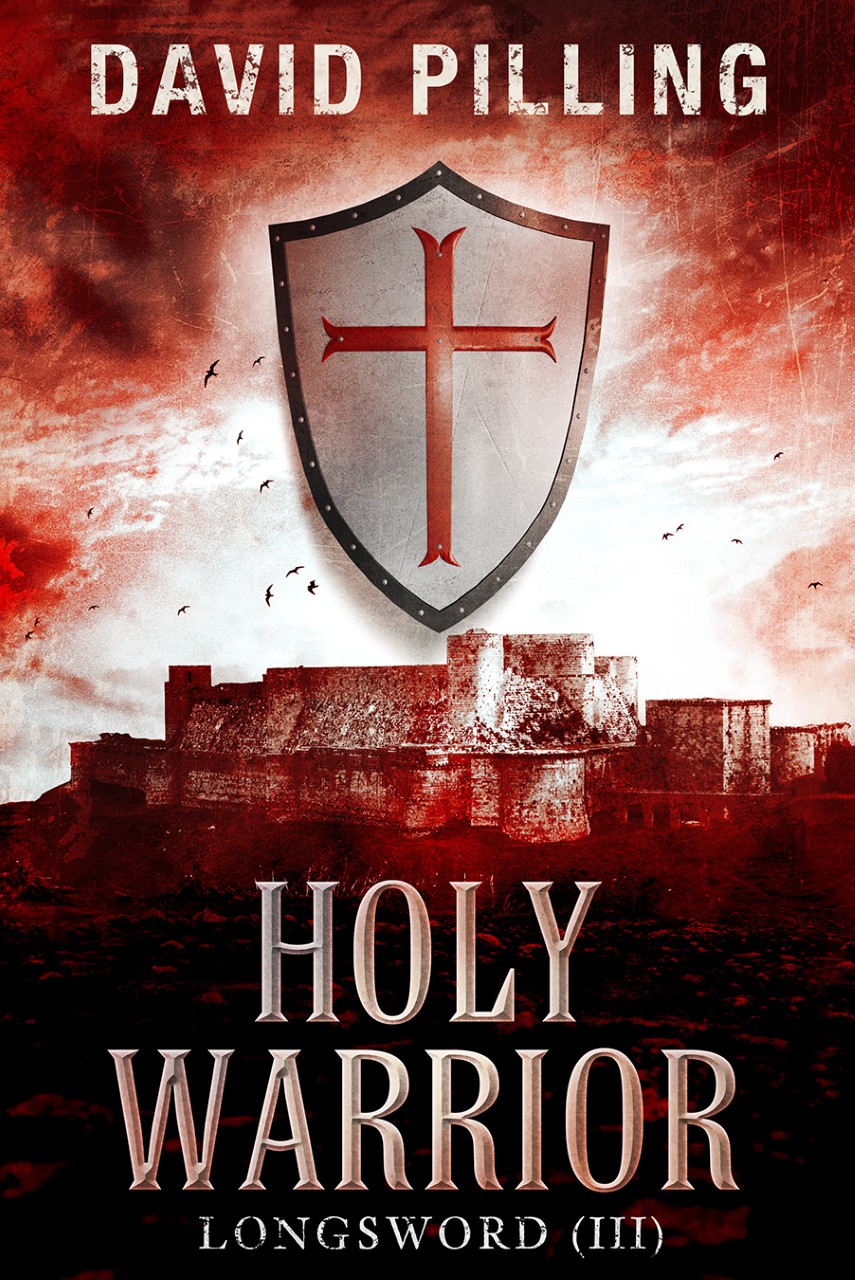
LONGSWORD 3!

This one has taken a while, but it's finally (almost) here. The third part of the adventures of Hugh Longsword, LONGSWORD (III) HOLY WARRIOR, is available for pre-order! Release date 26 November.


“Deus Vult - God wills it!”

1271 AD. The civil wars in England are over, and the Lord Edward has sailed to the Holy Land to save what remains of the crusader states. Abandoned by his allies, Edward insists on pushing on to Acre, one of the few cities still in Christian hands. On the way his fleet is almost destroyed by a storm, and he arrives to find Acre threatened by the host of Baibars, the all-conquering Mamluk sultan of Egypt, known as the Father of Conquest.

Among Edward’s followers is Hugh Longsword. With Acre surrounded by the Mamluks, Hugh is sent on a vital mission across hundreds of miles of enemy territory. His task is to deliver a message to the Tartars, the only power on earth that can defeat Baibars. The journey is long and dangerous, and Hugh must survive battle, treachery and the lethal agents of the Qussad, Baibars’ spy network.

LONGSWORD (III) HOLY WARRIOR is the third of the adventures of Hugh Longsword, swordsman, spy and assassin in the turbulent, war-torn 13th century.

Friday, 31 August 2018

The Lions of Gwynedd

Release day, release day, release day, yay yay yay!

THE LIONS OF GWYNEDD (I): RISE is now available as an ebook on Amazon.com and uk! An audiobook will follow in due course. Rawr!


“Hail Llywelyn, Prince of Wales!” 

1246 AD. The land of Gwynedd, North Wales, is under threat from the King of England. For centuries Gwynedd has resisted the might of the English, throwing back one invading army after another. Now King Henry, the latest would-be conqueror, has marshalled all his forces to finally break the Welsh to his will. Prince Dafydd, ruler of Gwynedd, is a dying man. Unable to lead his warriors in person, he puts his trust in his young nephew, Llywelyn ap Gruffudd.

As the king’s armies advance into North Wales, burning and slaughtering all in their path, Llywelyn must lead the host of Gwynedd in a desperate effort to save their homeland. All the while he must cope with the treachery of his own brothers, who seek to topple Llywelyn and seize power for themselves.

The Lions of Gwynedd (I): Rise chronicles the rise to power of Llywelyn, Prince of Wales and one of the most remarkable and dynamic figures of the era. His lifelong struggle for an independent Wales, against a backdrop of bloody battles, constant betrayal and lethal court politics, gave rise to the deathless legend of Llywelyn the Last. This is his story.


Wednesday, 3 August 2016

Folville's Law (II) Conquest

Some long-term followers of this blog may recall my first novel, titled Folville's Law and released way back in the mists of time (or 2011, to be more precise) by Musa Publishing. Musa have since folded, sadly, and I republished the book under my own steam under the new title Folville's Law: Invasion.

The sequel, originally published as a series of mini-adventures by Musa, has now been repackaged as a single volume and released today under the title FOLVILLE'S LAW (II): CONQUEST. The suitably dramatic, eye-catching cover is designed (as usual) by the good people at More Visual.


"England, 1330. The young King, Edward III, is a virtual prisoner, locked out of power by his mother Queen Isabella and her lover, the power-hungry Roger de Mortimer. Determined to rule, Edward gathers a band of loyal supporters and plots to reclaim his kingdom. 

Meanwhile war rages across the Channel in Gascony. Sir John Swale, forced into exile to escape his enemies in England, is caught up in a war for control of the province. Captured and ransomed by the French, he is sent back to England to restore his fortunes as one of King Edward's household knights. 

Yet Swale's former enemies have not been quiet. The outlaw Eustace Folville is still at large, and joined by the equally ruthless James Coterel. Together the Coterel and Folville gangs roam at will, robbing and slaying innocents. While they sow chaos, fresh war erupts between England and Scotland. 

As a loyal King's knight, Swale must face these dangers head-on. From pitched battles with outlaws in the heart of England to the hell of the Scottish March, he fights to a cruel finish for land and king and family..."

The book is available on Kindle now in all Amazon markets. A paperback version should be available soon!

Wednesday, 30 July 2014

King Edmund I (not Blackadder...)

I meant to write something on King Edmund I (reigned 1272-96), youngest son and successor of Henry III, to mark the anniversary of his death on 5th June, but got caught up with other things. Hence this is late...very, very late! Hopefully still of interest though.
The arms of Edmund of Lancaster, before his coronation

As we all know, Edmund became king unexpectedly after the death of his older brother Edward, stabbed by an assassin in the Holy Land in 1271-2. Edward's surgeons managed to cut away most of the diseased flesh around the wound, but the knife was poisoned, and Edward eventually succumbed.

Edmund himself was traveling to join his brother on Crusade at the time of the assassination, having contracted in England to serve Edward at the head of a hundred knights in return for 10,000 marks and shipping. He only reached the Holy Land in the late summer of 1271, by which time (we're uncertain when exactly Edward was killed) his brother may have already been dead. Stricken by grief, and hard pressed financially - he was forced to borrow money from creditors in Acre, and to send home to his mother for more funds - he departed in May 1272, having accomplished little of note. His little army made its way safely but sadly back to England, carrying the body of his older brother. For the rest of his life Edmund harboured frustrated ambitions to return to the Holy Land, and even took a second Crusading vow in November 1289, never to be fulfilled.

He eventually arrived home in 1274, having sent the grievous news of Edward's death on ahead to his parents. Henry III had died two years earlier, struck down by a fatal stroke as soon as word of his eldest son's demise was delivered to him by a trembling envoy. His queen Eleanor never really recovered and, after receiving King Edmund in London, retired to spend the rest of her days in the quiet sanctuary of the Abbey of St Mary and St Melor at Amesbury, praying for Edward's soul. 

England
As king, Edmund's chief domestic concern was to maintain the fragile peace in England, still recovering from the effects of the Second Baron's War, and to hang on to the remaining Plantagenet territories in France. Shortly after his coronation he was besieged by complaints of the abuses of local sheriffs, which he made some effort to rectify by removing the worst offenders from office. He also tried to improve the chaotic state of law and order, the inevitable result of civil war, but with only limited success: by the 1290s, twenty years into his reign, much of the north and midlands remained unsafe, and there were complaints of outlaw bands roving to and fro at will, 'despoiling and slaying religious and secular persons'. Edmund was much hampered by the attitude of ex-baronial rebels, such as Henry de Hastings, John Giffard and John Deyville, who instead of enforcing the law actively helped to break it, and were often accused of sheltering bands of robbers on their estates. 

Wales

Before he left for the Holy Land, Edmund had acquired the vast estates that later came to form the duchy of Lancaster: many of them in dubious circumstances following the harsh legal actions taken against Robert de Ferrers, Earl of Derby. Edmund had also received many other grants from his father, including a great number of lands and castles in Wales. Even before his brother's death, Edmund was in receipt of immense power and landed wealth, making him one of the most important Marcher barons in the kingdom. As such, he had a personal interest in the enforcement of crown authority in Wales. This set him on an inevitable collision with Llewellyn ap Gruffydd, the ambitious prince of Gwynedd who had caused so much trouble for Edmund's father. Three times Edmund summoned Llewellyn to London, to pledge his allegiance to the English crown. Three times Llewellyn refused, probably suspicious of English intentions, especially since Edmund had given shelter to his rebel brother Dafydd. 

Surviving copy of the Treaty of Conway
It soon became clear that a military settlement would have to be forced on the prince, but this was far easier said than done. Edmund was only too aware of the appalling defeats Anglo-Norman armies had suffered in Wales, the most recent being the destruction of a mercenary army under Stephen Bauzan at Coed Llathen in 1256. A competent but cautious soldier, Edmund was unwilling to summon the vast resources needed to break Llewellyn, and effectively pawn the English crown to Italian bankers. Instead he followed the example of his grandfather, King John, and attempted to exert pressure on Llewellyn by using his fellow Marcher lords and native Welsh rulers to increase royal territory and power in North Wales. 

The prince remained obdurate, and was only brought to the negotiating table after a partial invasion of North Wales in 1278. Edmund built a new castle at Rhuddlan and, using it as his base, advanced some way into Welsh territory at the head of an army of Marcher lords and a limited number of Gascon and Basque mercenaries. The campaign ground to a halt in bad weather, but Llewellyn was sufficiently unnerved by the scale of the king's Welsh support to agree to terms. The Treaty of Conway, signed in May 1279, agreed that Llewellyn would acknowledge the King of England as his feudal lord, in return for which he would be permitted to rule Gwynedd unmolested by Marcher or Crown ambitions.

The campaign of 1279 and subsequent treaty may have been mere face-saving exercises for Edmund, but he quickly took advantage of the peace. He bestowed a number of marcher lordships on Dafydd, setting up an effective buffer zone between Gwynedd and the English heartlands, and tacitly encouraging Dafydd to encroach on his brother's territory. Llewellyn and Dafydd were at daggers drawn for the next five years, until Dafydd contrived to have his brother poisoned. The treacherous nobleman duly succeeded to the lordship of Gwynedd, but spent the rest of his days fighting off ambitious kinsmen and outraged supporters of his late brother. England, by and large, was left in peace until the accession of Dafydd's fiery son, Owain y Gwyall (Owain 'of the axe') in 1301.


Scotland and France Edmund was anxious to maintain good relations with his brother kings in France and Scotland, and went to great efforts to do so. Upon the death of his sister, Margaret, wife of King Alexander III of Scotland, in 1275, he offered his daughter Mary as Alexander's new bride. Alexander accepted, but no children were born to the royal couple before his untimely death in 1290, breaking his neck while out hunting. Unable to agree a successor, in 1296 the Scottish barons invited Edmund to choose a new king from among them. By now seriously ill, Edmund half-heartedly proposed that his eldest son, Thomas, be married to Alexander's only living child, the infant Margaret, the 'Maid of Norway.' Edmund didn't live to witness the untimely death of Margaret in September 1296, and the English crown under his eighteen-year old successor Thomas I (1296-1318) had no influence on the choice of John Comyn, Lord of Badenoch, as the new King of Scots. Aside from Scotland and Wales, Edmund was chiefly interested in retaining Gascony, Ponthieu and Aquitaine, the rump of the once-mighty Angevin Empire in France. A better diplomat than he was a soldier, he managed to keep on largely friendly terms with his cousins Philippe III and Philippe IV of France until the very end of his reign. Upon the death of his first wife, Queen Aveline, he married Blanche of Artois in 1275, the widow of the King of Navarre. By virtue of this union Edmund was de facto governor of Champagne until 1284, and acquired the courtesy title of Count of Champagne and Brie. When duty allowed, he paid regular visits to Champagne and Navarre, and personally quelled a civil revolt at Provins in January 1280. 

Despite his personal ties to France, Edmund was unable to deter the energetic and ambitious French king, Philippe IV, from exploiting the trouble that flared up between sailors of Normandy and Gascony in 1293, resulting in the bloody sack of La Rochelle. Various conferences between English and French diplomats came to nothing, and in 1294 Aquitaine was formally confiscated by Philippe. 

Furious at being duped, Edmund made immediate preparations for war. He was hampered by the indifferent attitude of his barons, who had little enthusiasm for military service overseas, and his own increasingly bad health. Accompanied by Henry de Lacy, Earl of Lincoln, Edmund finally sailed at the head of an army of mercenaries to reinforce his garrisons in south-west France. The following campaign achieved little. After sailing up the Gironde to Bourg and Blaye, Edmund collected what forces he could and advanced on Bordeaux in late March, but the occupying French forces had had time to prepare and the city proved impregnable. A few English soldiers did manage to force an entry, but the gates were closed behind them and they were taken. It seems that an attempt was then made to bribe some citizens into handing the city over to the English, but this was discovered. With money running short, and, in the knowledge of the approach of a large French force, Edmund raised the siege and withdrew. He fell ill about Whitsun and died on 5 June 1296 at Bayonne. 


Detail from tomb effigy of Edmund I

He had instructed that his body was not to be buried until his debts had been paid, so the body was embalmed and kept by the Franciscans of Bayonne until it was shipped back to England in 1297 and honourably buried in Westminster Abbey. Edmund's elaborately carved tomb survives, fittingly, next to his brother's. His first wife, Avelina, is also buried there, her small canopied tomb surviving on the north side of the presbytery. With his second wife, Blanche, who survived him, Edmund had three sons, Thomas, Henry, and John, and one daughter. 

During the disastrous reign of his ill-fated successor, Thomas, the modest successes of Edmund I came to be fondly remembered as a sort of golden age. Following the assassination of Thomas in 1318 by his own wife, Alice de Lacy, the crown passed to Edmund's younger son Henry IV (1318-1333) who abdicated on account of blindness in favour of his son Henry V (1333-61), known to later generations as Henry the Conqueror, or Henry the Great.