Thursday, 25 October 2012

Saint Crispian's dinner time

Ken and Em's divorce was a heated affair


Today is the feast of Crispian, i.e. the 25th of October, the day that all good men are supposed to teach their sons about the Battle of Agincourt. Lacking any handy sons, I've decided to preach about it on here instead. 

Agincourt was fought on the 25th of October 1415, and was one of the highlights of the epic slugging match of the Hundred Years War, fought to determine whether a Frenchman or a man of French descent should sit on the French throne. A couple of centuries later Shakespeare turned it into the main event of his play, Henry V, a glorious hymn to English patriotism. The speeches he puts into the mouth of the heroic King Hal at Harfleur and on the eve of Agincourt are pretty much familiar to anyone with a passing knowledge of English literature. When expressed by a great actor, they still have the power to electrify, as dear old Kenneth Branagh demonstrated in his 1989 film version:

https://www.youtube.com/watch?v=OAvmLDkAgAM

Modern-day scholarship, that most joyful of enterprises, has asserted over and over again that the historical battle was anything but a glorious event, and in fact consisted of loads of men bludgeoning each other into gory oblivion on a freezing winter's day in the middle of a muddy field. So much mud, in fact, that thousands of the heavily-armed French knights and men-at-arms drowned in the stuff, while the lighter-armed British archers - English, Welsh and Irish - danced rings around them. 

Doubt has been cast over the traditional view of the battle, in which the French cavalry charged forward to be mown down by a storm of arrows. The longbow, some critics point out, lacked the power to send an arrow through heavy plate armour. Most of the French dismounted before the battle and trudged forward on foot, wishing to avoid a repeat of earlier disasters like Crécy and Poitiers, where they did indeed charge on horseback and came thoroughly unstuck. Mud and rain, it seems, won the day for King Harry and Saint George, who can count themselves lucky the weather was on their side.

The other fondly-held view of the battle, that Henry's 'poor and starved band' was hideously outnumbered by up to sixty thousand chortling, garlic-spewing Froggies, has also come under the microscope. In her 2005 book 'Agincourt: A New History' Anne Curry argues that the French army numbered about 12,000, and the British about 9,000, which vastly evens up the odds. However, in the same year Juliet Barker flatly contradicted Curry's claim and stated that the British were outnumbered by four, possibly even six to one. Contemporary accounts, given as they were to ridiculous hyperbole, are of little help, and the surviving records are too patchy to build up a clear figure. 

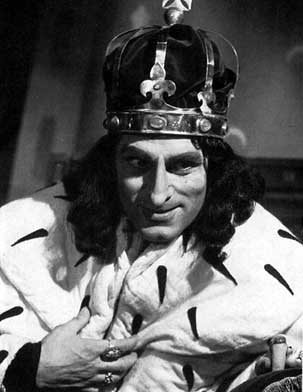
A more interesting question might be - is Agincourt still a valid reason for celebration? It made for brilliant propaganda in World War Two, when Laurence Olivier's 1944 film of Henry V was used as a brassy, tub-thumpingly patriotic morale-booster for a British public exhausted by years of war. These days, however, it is possible to view Henry V's invasion of France as a largely futile exercise. 

Henry's bid to win the French throne was scuppered by his own early death and the rebound of French nationalism, spearheaded by Joan of Arc, that followed a few years later. The English position in France was steadily eroded until the last English field armies were blasted to pieces by new-fangled artillery at Castillon and Formigny, and the English nobility slumped into the murderous round of infighting remembered as The Wars of the Roses. 

Thus the Hundred Years War ended in defeat and civil war for England, and the eventual result was the Tudor dynasty. Which in turn led to those dreadful Cate Blanchett movies, and the even worse CBC/Showtime TV series with Jonathan Rhys-Meyers embarrassing himself as Henry VIII.

If only Henry V had taken up gardening instead. 


Friday, 12 October 2012

Belaying Pins and Pirate Kings...


...S.G. Rogers Sets Sail! Suzanne has the platform for this post, centred on things nautical and her spiffy-sounding new fantasy novel, Tournament of Chance - clew up the futtock shrouds, Ms Rogers, and Roger the Cabin Boy!

'Research poses many challenges, whether an author writes historical fiction or fantasy literature.  In the former, a writer must do his or her due diligence as part of the craft.  Although some readers might assume fantasy worlds are just completely made up, that’s not necessarily true.  For me, fantasy worlds work best when I can picture them clearly. As a writer, I try to have clear and concrete details available before I pen a scene. Since the setting for my latest release, Tournament of Chance, is Earth-like, the medieval-ish setting required a surprising amount of research. 

One particular area of inquiry involved maritime transportation.  The plot required the main characters to make two voyages in a two different ships.  My challenge was to describe the ships in such a way to paint a picture in the mind of the reader, but avoid immediate association with any particular nation.  Fortunately, as a fantasy writer, I’m able to fudge eras!

Cutter
I was looking for a vessel that was small, maneuverable, and could be sailed by a very small crew.  I chose the cutter, which is a single-masted sailboat. Although the ship in the illustration above (Louis Le Breton (1818–1866)) is a French cutter from the 19th century, it had the look I wanted and the generic name I needed. 


For the second voyage, I needed an armed ship manned by a larger crew, so I selected a corvette.

Corvette
The vessel above is a type of corvette, which is a small warship about 40 to 60 feet in length.  The term dates back to the 1700s. I found this illustration (used with permission) on Rob Ossian’s Pirate’s Cove website, dedicated to pirate and nautical information: http://www.thepirateking.com/index.htm
The Pirate King has a wealth of information for authors and enthusiasts, from biographies of historical figures to rum reviews.

Although neither illustration appears in Tournament of Chance, I referred to them when I was writing the nautical scenes. I began my research on Wikipedia, by the way, and moved on from there. For attention to detail, I discovered beautiful ship models at The Art of Age of Sail: http://www.ageofsail.net

Writing a fantasy novel with historical detail takes a lot longer, but the results can be well worth the effort. My research in no way made me an expert in historical sailing vessels, but I have a much greater appreciation for them than I did before.  For example, I discovered a belaying pin makes a mighty fine weapon in a pinch.  Who knew?

~ S.G. Rogers

Excerpt:

Heather peered at Ariel. Despite his tough façade, the boy radiated loneliness and deprivation. “If you make it back to Ormaria, call on Lady Parker at the castle. Tell her Heather sent you. She’ll help.”

Ariel gave Heather a mistrustful glance. “Why should she help me? I’m nothing to her.”

“She’s very kind,” Heather said. “And you’re not nothing; you’re a person.”

Bast’s uninjured hand descended on Ariel’s shoulder and knocked him to the deck. “You’ve been told not to talk to Heather. I’ll whip you for this.”

“You will not,” Heather exclaimed.

Ariel scrambled backward as she stepped between him and Bast.

“Get out of my way, girl,” Bast roared.

“No.”

Bast shoved Heather aside and advanced on Ariel, who cowered in a quivering lump of fear. Heather plucked the nearest belaying pin from the pin rail alongside the bulwark and brought it squarely down onto Bast’s injured hand. He screamed in pain.

“Run, Ariel!” she yelled. “Hide in the cargo hold.”

Bast turned his murderous temper on Heather. The crystal around his neck flared, and she found herself tumbling through the air with the belaying pin still clutched in her hand. When she landed at the base of one of the four cannons, everything went black.

http://childofyden.files.wordpress.com/2012/02/flourish6.jpg?w=584

In Tournament of Chance, a hunter’s daughter becomes the spark that ignites a revolution—in time.

 When a beautiful commoner enters the Tournament of Chance archery competition, her thwarted victory sparks a revolution in the oppressive kingdom of Destiny. Although Heather never believed the legends about the restoration of Ormaria, after three shape-shifting Ormarian wizards awaken from a long magical slumber, she joins their perilous quest to regain the throne. Heather battles vicious predators and angry trolls to free the wizards’ magic, but at a horrendous cost. She is unexpectedly torn from the arms of the man she loves and hurled back in time to fulfill a prophecy not yet written. The ensuing maelstrom tests Heather’s survival skills, wits, and endurance. Will she become an unwritten footnote in history, or can she trust the magic to lead her back to her one true love?


Now available in all e-formats from Musa Publishing HERE. Also available for the Kindle at Amazon. Coming soon to BN.com and wherever fine e-books are sold. To learn more about author S.G. Rogers, visit her blog at www.childofyden.wordpress.com


Thursday, 11 October 2012

Sir John clatters to a halt...


 You just lie there for a bit, mate

...and finally gets to climb off his knackered horse, peel off his rusted armour (or 'harness', to use the historically correct term) and hang up his dinted broadsword over the fireplace. Yes, Sir John Swale's opus is coming to an end with 'The Wolf of Fairburn', Part Thirteen of The John Swale Chronicles, released at the end of this month by Musa Publishing. All loose ends will be tied up (hopefully), all wrongs will be righted (maybe) and all of the long-suffering Sir John's enemies and problems will be banished forever (almost certainly not).

Still, at least the poor man gets to take a break. He's had a hard time of it, what with fearsome outlaws, Scottish rebels, slaughtered kinsmen, ambitious kings and the general nastiness of 14th century life to contend with. My heartfelt thanks go to Musa  for giving me the platform to tell Sir John's story, otherwise it might have remained lost forever inside some musty old leather-bound chronicle.

Will he return? Maybe, though it might be best to let his ghost rest awhile. He does, however, have a daughter...


Saturday, 22 September 2012

Martyrs and Traitors


I'm currently reading 'Martyrs and Traitors' by Marina Julia Neary, a novel about Bulmer Hobson, a member of the Irish Volunteers and Irish Republican Brotherhood and a key figure in the 1916 Easter Rising. This isn't a period of history I knew much about, and well out of my usual medievalisms, but I highly recommend it. Neary's prose style is informative without being the slightest bit dull or plagued by 'info-dumps', and she recounts events and personalities with a vivid, lyrical ease that I can only admire. Get It!!

http://www.amazon.com/Martyrs-Traitors-Marina-Julia-Neary/dp/0984651748/ref=sr_1_1?s=books&ie=UTF8&qid=1348306532&sr=1-1&keywords=martyrs+and+traitors+Neary

A plot summary of the book is below, taken from Amazon:

'Dublin, Good Friday, 1916 Kidnapped and held at gunpoint by his former IRB comrades, Bulmer Hobson, the misunderstood antihero of 1916, denounces the ill-fated Easter Rising he had tried to prevent. While his captors joke about shooting him and dumping his body on the railroad tracks, his terrified fiancee roams the chaos-ravaged city in search of him. Fifteen years of political rivalry, international conspiracy, botched love affairs, and taunting promises of glory culminate in a bloody showdown. Once branded 'the most dangerous man in Ireland' by the police, Hobson is about to be deleted from history. Based on historical accounts, Martyrs and Traitors is an intimate glance into the conflicted and shattered heart of Ireland's discredited patriot.'


Thursday, 20 September 2012

King Dickie lies buried in a hole...


 I'm not evil, alright? It's just a squint.

 …probably. The discovery of a medieval skeleton in the remains of the Choir of Greyfriars church has inspired a lot of excitement in recent days, for the bones could well be those of King Richard III, one of the most controversial figures in English history.

It almost seems too good to be true, but it certainly sounds like our man: Richard, as every schoolboy knows (or did, before they discovered the pleasures of happy slapping and crack cocaine) was said to be deformed, and was very definitely killed in battle against the ragtag army of the Welsh usurper, Henry Tudor, at the Battle of Bosworth in 1485. The man found under a council car park near a ring road in Leicester has an arrow-head in his back, pronounced scoliois or curvature of the spine, and a mangled skull:


Just to be sure, a DNA test is now being conducted, with the bones being tested against the DNA of Richard’s living descendents, which will take about three months to complete:


Whether or not the bones really are those of Richard III, what is undeniable is the emotional response from many quarters to his possible discovery. Despite being over 600 years dead, Richard has a great many fans and admirers, often termed ‘Ricardians’, and there is even a Richard III Society dedicated to cleaning up his rather murky historical reputation. Since the discovery of the bones journalists have been lining up to say nice things about the man and his brief reign, such as this, um, interesting piece in The Telegraph calling for a state funeral and comparing Richard favourably to ‘bloodthirsty maniacs’ such as Edward I and Henry VIII:


Whatever is finally done with Richard’s remains – assuming they are his – it would be nice to think that his discovery and burial will lead to a more balanced assessment of a man who was neither hero nor villain, toad-like hunchback monster or maligned hero-king. It’s difficult to attempt a balanced picture of such a complex and divisive figure in a few glib paragraphs, but I’ll give it a try.  

King Richard III was memorably vilified by Shakespeare as a matchless villain who intimated his evil thoughts to the audience and slaughtered his way to the throne, mowing down Edward of Lancaster, Henry VI, his brother George, Duke of Clarence, William Lord Hastings, Anthony Woodville, Earl Rivers…and of course, his two nephews, the famous ‘princes in the Tower’, Edward V and Richard, Duke of York.

Of this rather impressive list of victims, Richard certainly had Hastings killed in a shocking and illegal fashion, and Anthony Woodville and his nephew Richard Grey were both seized and executed on Richard’s orders. There is no direct evidence that he had a hand in the deaths of most of the others, and none at all that he murdered the princes.

Various arguments and justifications have been put forward justifying Richard’s apparently ruthless and self-serving behaviour leading to his seizure of power in 1483. The pulse-quickening joys of contemporary documents such as Titulus Regius and the Stillington Precontract are often wheeled out in Richard’s defence as part of explanations for his actions, and in 1984 he was even granted a televised trial for his alleged murder of the princes (verdict: Not Guilty). It has also been pointed out that up until 1483 he was a model subject, absolutely loyal to his brother Edward IV, and never showed any signs – unlike his grasping brother Clarence – of harbouring treacherous ambitions.

The man does not lack for defenders, then, but in this blog’s view none of it is enough to wipe his slate clean. The principal charge against Richard’s reputation, the murder of his nephews, may never be proved conclusively one way or the other, but at the time of their disappearance from public view in 1483 he had the prime motive and opportunity to be their assassin. Other suspects have been put forward – principally the Duke of Buckingham and Henry Tudor – but none, to my mind, are convincing.

Whether or not Richard was capable of ordering the deaths of innocents depends on your reading of the man. He was raised during The Wars of the Roses, during which time much of England’s baronage wiped each other out in an orgy of battlefield deaths and drumhead executions. Richard’s own father was killed in battle, and from an early age he was used to violent death and bloodshed: at the age of just 17, he took part in the treason trials of Henry Courtenay and Lord Hungerford, and at 18 he fought at the Battle of Tewkesbury, where the last Lancastrian army was defeated and butchered with a cruelty typical of the age. Thus Richard grew up in an atmosphere of murderous realpolitik and bloodstained paranoia, where a man learned to act in ruthless and predatory fashion if he wanted to survive.

Above all, Richard learned the importance of striking quickly at those that threatened him, hence his actions in 1483. Remarkably little sympathy is wasted on those that definitely did fall victim to Richard, and some effort has been made to justify his actions by portraying them in a negative light: Lord Hastings, for instance, in reality one of the most loyal and capable supporters of the Yorkist regime, has been depicted in fiction as a murderous paedophile. The fact that Richard’s thugs dragged Hastings out of a council chamber and hacked his head off, without waiting for even the semblance of a trial, is made much more palatable if Hastings can be vilified.

In the end, propaganda works both ways. Richard suffered from it for many centuries, and now it seems that some of those who wish to recast him as a tragic hero are prepared to exercise it on his behalf. The grim and unexciting reality is that Richard III was a competent, ruthless aristocrat, typical of his class and time, who got greedy and paid for it on a bloody August day in 1485.

Rest in pieces, Your Highness…


Wednesday, 19 September 2012

More bad news for the publishing industry...

...or is it? Two interesting recent comparative articles. One from the Guardian:

http://www.guardian.co.uk/books/2012/sep/18/ebook-price-war-discounts

Pretty negative stuff, though one of the blog comments regarding possible uses for a Jeffrey Archer novel is amusing. And then there is a response to the Guardian piece from Mercy Pilkington:

http://goodereader.com/blog/electronic-readers/more-bad-news-for-the-publishing-industry/


Monday, 3 September 2012

'Why I've paid to print my next bestseller...'

Interesting article on the Mail website by Graham Lord, a very established and succesful author who has recently found himself obliged to go the self-publishing route via Amazon Kindle Direct:

http://www.dailymail.co.uk/home/books/article-2196774/Author-Graham-Lord-reveals-paid-print-book.html?ito=feeds-newsxml

Lord quotes some fearsome statistics: total book sales in the UK in April this year were down a quarter on the previous April, and overall UK sales of novels have crashed by 50% in the last two years. This is understandably making agents and publishing houses nervous of taking on new authors. This in turn forces authors to turn to other routes to get their work out in the big wide world.

Food for thought for all of us...much of it difficult to digest.